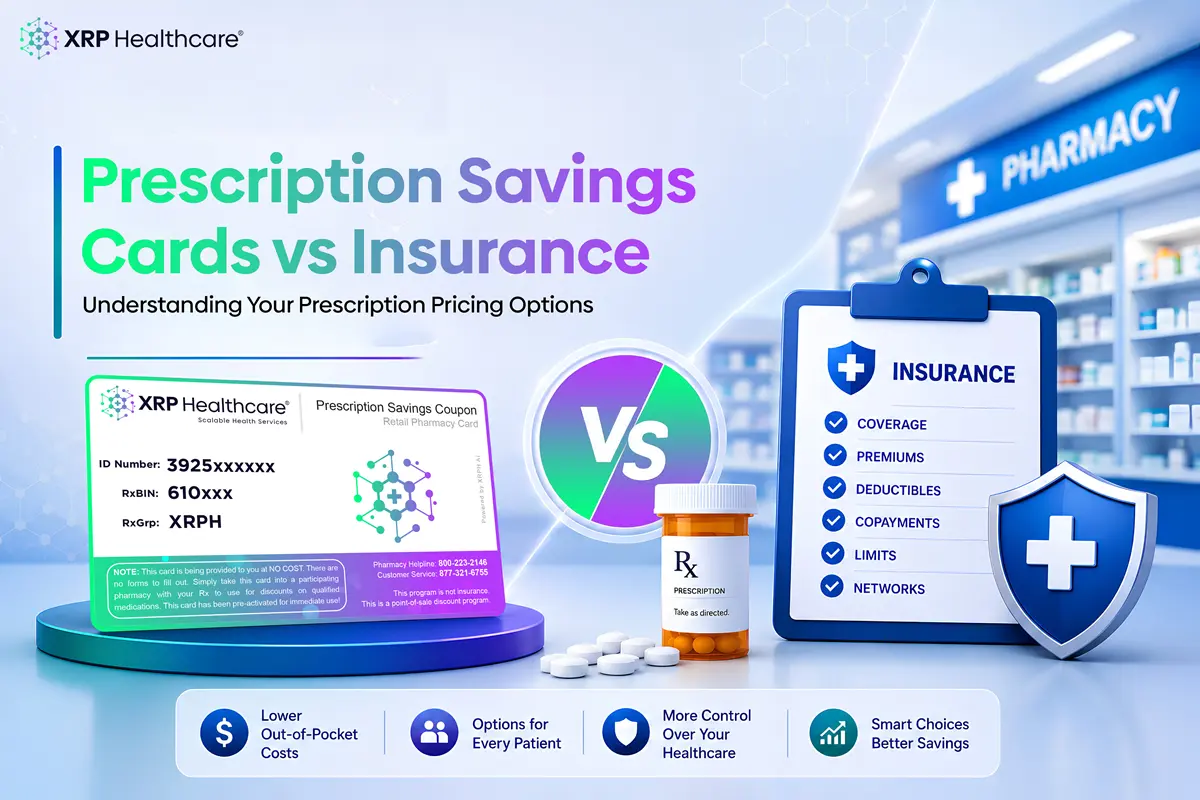
When filling a prescription, many consumers assume that health insurance automatically provides the lowest available price.
However, prescription pricing is often more complex than many people realise.
Millions of Americans compare insurance pricing, copayments and Prescription Savings Card pricing before purchasing medications because the available cost can vary depending on the medication, pharmacy and pricing programme being used.
Understanding the difference between Prescription Savings Cards and insurance can help consumers make more informed decisions about prescription medication costs.
This guide explains how both options work, their key differences and why many consumers compare available pricing before filling prescriptions.
What Is a Prescription Savings Card?
A Prescription Savings Card is a discount card that may help consumers access lower cash prices on eligible prescription medications at participating pharmacies.
Unlike health insurance, a Prescription Savings Card does not provide healthcare coverage.
Instead, it provides access to available discount pricing that may reduce the amount paid for medications.
Most Prescription Savings Cards are:
• Free to use
• Available without insurance
• Accepted at participating pharmacies
• Designed to help consumers compare available medication pricing
Many Americans use Prescription Savings Cards as part of their strategy to manage medication costs.
Learn more about the:
XRPH Prescription Savings Card
https://www.xrphealthcare.ai/xrphsavingscard
What Is Health Insurance?
Health insurance is designed to help cover healthcare-related expenses.
Insurance plans typically involve:
• Monthly premiums
• Deductibles
• Copayments
• Coinsurance
• Coverage limits
• Provider networks
• Prescription formularies
The level of coverage depends on the insurance provider and policy selected.
Insurance may help reduce medical costs, but prescription pricing can still vary depending on the medication and plan structure.
The Key Difference Between Prescription Savings Cards and Insurance
Although both can affect prescription pricing, they serve very different purposes.
Prescription Savings Cards provide access to available discounted cash pricing.
Insurance provides healthcare coverage.
Prescription Savings Cards are not insurance and do not replace insurance coverage.
Instead, they act as a pricing tool that allows consumers to compare available medication costs.
Prescription Savings Card vs Insurance Comparison
Why Do Consumers Compare Both?
Many consumers compare both options because prescription prices are not always identical.
Depending on the medication and pharmacy:
• Insurance pricing may be lower
• Prescription Savings Card pricing may be lower
• Cash pricing may differ between pharmacies
This is why many consumers compare available options before filling prescriptions.
The goal is to identify the pricing option that works best for their situation.
Can Prescription Savings Cards Be Used With Insurance?
No.
Prescription Savings Cards generally cannot be combined with insurance.
Consumers typically choose one pricing option when purchasing medication:
• Insurance pricing
or
• Available Prescription Savings Card pricing
Users should compare both options before making a purchasing decision.
Who Benefits Most From Comparing Both Options?
Several groups frequently compare insurance pricing and Prescription Savings Card pricing.
Uninsured Individuals
Consumers without insurance often rely on Prescription Savings Cards to access available discounts.
High-Deductible Plan Users
Consumers with high deductibles may compare available savings card pricing against insurance pricing.
Families
Families managing multiple prescriptions often compare available pricing options.
Long-Term Medication Users
Consumers taking ongoing medications frequently monitor available pricing opportunities.
Price-Conscious Consumers
Many consumers simply want to identify the most affordable option available.
Why Prescription Prices Continue to Vary
Prescription medication pricing is influenced by several factors, including:
• Pharmacy purchasing agreements
• Pharmacy network participation
• Insurance arrangements
• Geographic location
• Manufacturer pricing
• Discount programmes
Because these variables differ, medication prices can vary between pharmacies and pricing programmes.
This is one reason Prescription Savings Cards continue to grow in popularity.
The XRPH Prescription Savings Card
The XRPH Prescription Savings Card is available through the XRPH AI App.
The card provides access to available prescription savings at over 68,000 participating U.S. pharmacies.
Features include:
• Free access
• No insurance requirement
• Nationwide participating pharmacy network
• Integration with the XRPH AI ecosystem
• Eligible XRPHAI rewards for verified usage
Users can access their card directly inside the XRPH AI App and present the card information when filling prescriptions.
Learn more:
https://www.xrphealthcare.ai/xrphsavingscard
Conclusion
Prescription Savings Cards and insurance serve different purposes.
Insurance provides healthcare coverage, while Prescription Savings Cards provide access to available discounted cash pricing.
Because prescription pricing can vary significantly, many consumers compare both options before purchasing medications.
Understanding the differences between Prescription Savings Cards and insurance helps consumers make more informed decisions about healthcare costs and medication pricing.
For consumers seeking a free Prescription Savings Card integrated into a healthcare platform, the XRPH Prescription Savings Card is available through the XRPH AI App.
Related Articles
• What Is a Prescription Savings Card?
• How to Save Money on Prescriptions in the USA
• Why Prescription Prices Vary Between Pharmacies
• How XRP Healthcare Helps Americans Access Prescription Savings
FAQS
Q: Are Prescription Savings Cards insurance?
A: No. Prescription Savings Cards are not insurance.
Q: Can I use a Prescription Savings Card without insurance?
A: Yes. Most Prescription Savings Cards can be used without insurance.
Q: Can I use a Prescription Savings Card and insurance together?
A: Generally no. Consumers typically choose one pricing option when filling prescriptions.
Q: Which option is cheaper?
A: Pricing varies depending on the medication, pharmacy and available pricing programmes.
Q: Why do consumers compare both options?
A: Consumers compare both options because available pricing may differ depending on the medication and pharmacy.
Q: What is the XRPH Prescription Savings Card?
A: The XRPH Prescription Savings Card is available through the XRPH AI App and provides access to available prescription savings at participating U.S. pharmacies.