Jun 21, 2026
Why Prescription Prices Vary Between Pharmacies
Learn why the same prescription medication can have different prices at different pharmacies and how consumers compare pricing to reduce medication costs.
Retail network access is facilitated through agreements with United Networks of America (UNA). Display of pharmacy brand marks does not imply ownership, endorsement, or direct partnership with XRP Healthcare M&A Holding Inc.
Technology partnerships reflect collaborative or project-based cooperation. Display does not imply equity ownership or endorsement unless expressly stated.
Pharmaceutical and supply relationships reflect existing commercial arrangements within acquired operating entities. Display does not imply exclusivity or endorsement beyond standard commercial supply agreements.
Advisors provide professional services to XRP Healthcare M&A Holding Inc. No partnership or ownership interest is implied unless publicly disclosed.
All third-party trademarks remain the property of their respective owners. Display does not imply endorsement, ownership, or partnership unless expressly stated.
Jun 21, 2026
Learn why the same prescription medication can have different prices at different pharmacies and how consumers compare pricing to reduce medication costs.
Many Americans assume prescription medication prices are fixed.
However, one of the most surprising realities of the U.S. healthcare system is that the same prescription medication can often have different prices at different pharmacies.
In some situations, consumers may find substantial differences in pricing depending on where they fill their prescription.
Understanding why prescription prices vary is one of the most important steps consumers can take when trying to reduce medication costs.
This guide explains the factors that influence prescription pricing and why many consumers compare pharmacy pricing before purchasing medications.
XRPH Prescription Savings Card
No.
Prescription prices are not always identical between pharmacies.
Two pharmacies located only a few miles apart may offer different pricing for the same medication.
These price differences occur because pharmacies operate under different purchasing agreements, pricing structures and reimbursement arrangements.
As a result, consumers often compare available pricing before filling prescriptions.
Pharmacies purchase medications through complex supply chains.
Pricing can vary depending on:
• Pharmacy purchasing agreements
• Distributor relationships
• Inventory levels
• Contract terms
• Pharmacy size and buying power
Large pharmacy chains and independent pharmacies may not always acquire medications under identical terms.
This can influence retail pricing.
Insurance can also influence prescription pricing.
Different insurance plans may negotiate different reimbursement rates with pharmacies.
As a result:
• One consumer may pay one price
• Another consumer may pay a different price
• Cash pricing may differ again
The final cost depends on the interaction between the pharmacy, the insurance provider and the medication involved.
Prescription pricing can vary based on geographic location.
Factors may include:
• Local competition
• Regional purchasing costs
• Pharmacy operating expenses
• State-specific factors
For this reason, consumers may sometimes see different pricing between pharmacies in different cities or regions.
Many pharmacies participate in pricing programmes and discount networks.
These programmes can affect the pricing available to consumers.
Prescription Savings Cards often provide access to available pricing through participating networks.
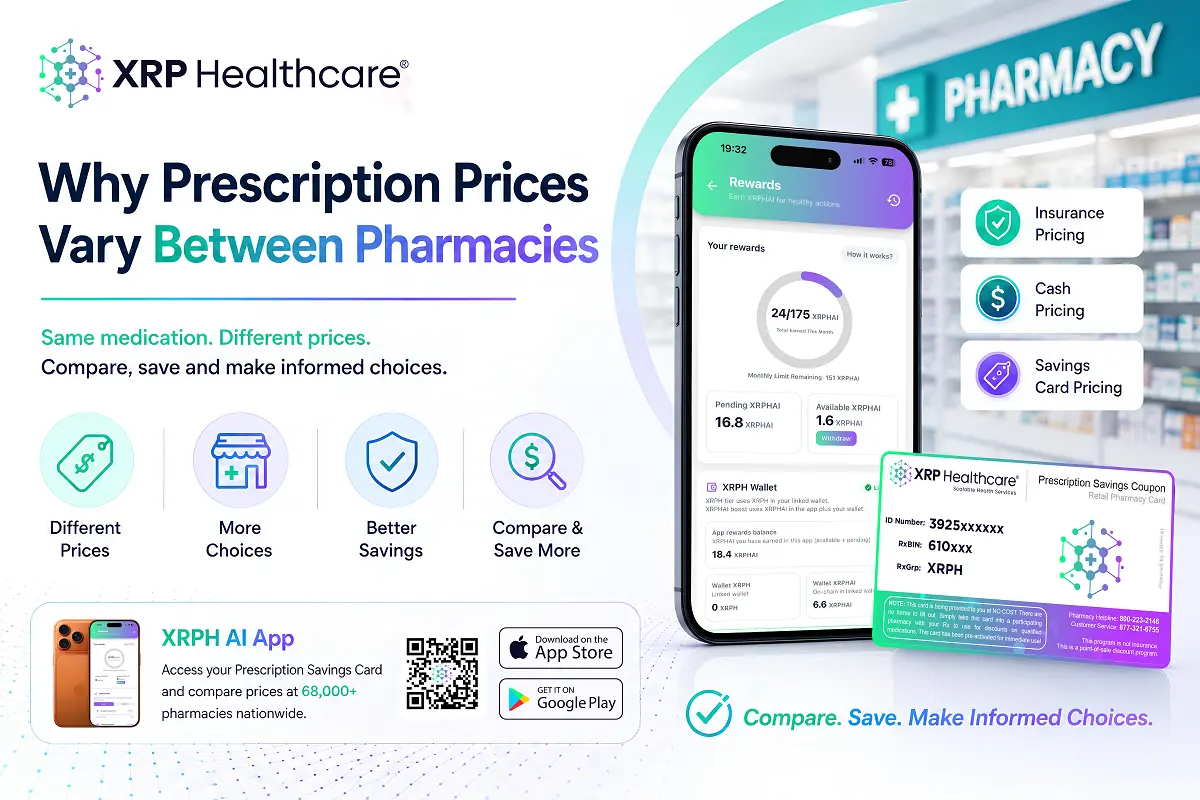
Consumers who compare available pricing may discover differences between:
• Insurance pricing
• Cash pricing
• Prescription Savings Card pricing
This is one reason Prescription Savings Cards continue to grow in popularity.
Because pricing can vary, many consumers compare multiple pharmacies before purchasing medication.
Potential benefits include:
• Lower out-of-pocket costs
• Better understanding of pricing options
• Access to available discounts
• Improved transparency
Comparing available pricing allows consumers to make more informed purchasing decisions.
Prescription Savings Cards provide consumers with access to available discount pricing at participating pharmacies.
They are not insurance.
Instead, they provide another pricing option consumers can compare when filling prescriptions.
Consumers frequently compare:
• Insurance pricing
• Available cash pricing
• Prescription Savings Card pricing
before making a purchase decision.
The XRPH Prescription Savings Card is available through the XRPH AI App.
The card provides access to available prescription savings at more than 68,000 participating U.S. pharmacies.
Users can access the card directly within the app and compare available pricing options when filling prescriptions.
Features include:
• Free access
• No insurance requirement
• Nationwide participating pharmacy access
• Integration with the XRPH AI ecosystem
• Eligible XRPHAI rewards for verified usage
Learn more:
https://www.xrphealthcare.ai/xrphsavingscard
Consumers who understand how prescription pricing works are often better equipped to compare available options.
Understanding that pricing can vary allows consumers to:
• Explore available savings opportunities
• Compare pharmacies
• Evaluate available pricing programmes
• Make informed healthcare decisions
As prescription costs continue to be an important issue for many households, pricing transparency remains increasingly valuable.
Prescription medication prices are influenced by many factors, including pharmacy purchasing agreements, insurance arrangements, geographic location and available discount programmes.
Because these factors vary, the same medication may have different pricing at different pharmacies.
Consumers who compare available pricing options may be able to identify opportunities to reduce medication costs.
For users looking for a Prescription Savings Card integrated into a healthcare platform, the XRPH Prescription Savings Card is available through the XRPH AI App and provides access to available prescription savings at participating U.S. pharmacies.
• What Is a Prescription Savings Card?
• How to Save Money on Prescriptions in the USA
• Prescription Savings Cards vs Insurance
• How XRP Healthcare Helps Americans Access Prescription Savings
Q: Why do prescription prices vary between pharmacies?
A: Prices may vary because of pharmacy purchasing agreements, insurance arrangements, geographic location and pricing programmes.
Q: Is the same medication always the same price?
A: No. The same medication may have different pricing at different pharmacies.
Q: Does insurance affect prescription pricing?
A: Yes. Insurance arrangements can influence the final price paid by consumers.
Q: Can Prescription Savings Cards help reduce medication costs?
A: Prescription Savings Cards may provide access to available discount pricing at participating pharmacies.
Q: What is the XRPH Prescription Savings Card?
A: The XRPH Prescription Savings Card is available through the XRPH AI App and provides access to available prescription savings at participating U.S. pharmacies.