Introduction
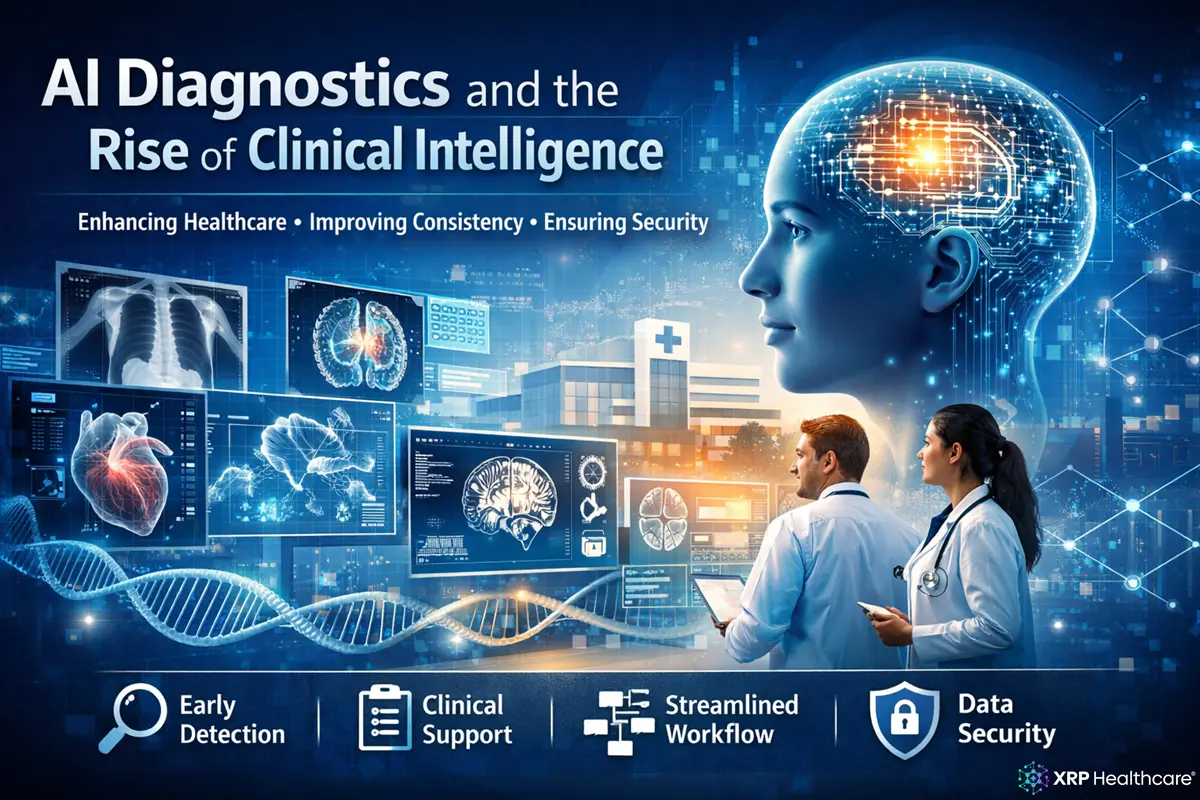
AI diagnostics are no longer theoretical tools in healthcare. They are becoming part of the infrastructure that supports modern clinical decision-making. From cardiovascular imaging to anomaly detection, artificial intelligence is identifying patterns that may be invisible to the human eye. As healthcare systems face increasing pressure, AI diagnostics are emerging as a stabilising layer of clinical intelligence.
AI Diagnostics Beyond Human Pattern Recognition
Medical imaging generates vast amounts of data. AI diagnostics systems are trained to analyse subtle variations in shape, density and signal patterns across thousands of datasets.
This enables earlier detection of abnormalities and improved diagnostic consistency. Rather than replacing clinicians, AI diagnostics support them by increasing clarity and reducing variability.
Clinical Intelligence as Infrastructure
AI diagnostics should not be viewed as optional add-ons. They are becoming part of healthcare infrastructure. Infrastructure supports stability. It improves workflow. It reduces bottlenecks.
When diagnostic processes become more consistent, downstream care pathways become more reliable. Clinical intelligence, powered by AI, strengthens the entire system.
Reducing Diagnostic Variability
One of the largest infrastructure gaps in healthcare is inconsistency. Two providers reviewing the same scan may reach different conclusions. AI diagnostics reduce this variability by introducing standardised analysis.
This strengthens:
Diagnostic confidence
Triage prioritisation
Risk stratification
Workflow efficiency
As healthcare systems scale, consistency becomes essential.
AI Diagnostics and Responsible Governance
Adoption of AI diagnostics requires careful governance. Clinical oversight, validation datasets and regulatory compliance remain central to responsible deployment. According to research published by Harvard Business Review, sustainable AI integration depends on governance frameworks that balance innovation with patient safety.
External reference:
AI diagnostics must operate within structured clinical environments to maintain trust and reliability.
Privacy and HIPAA-Grade Standards
AI diagnostics rely on data integrity. The XRPH AI App operates at a HIPAA-grade standard, ensuring secure handling of sensitive health information.
Encryption, structured access control and privacy-first design principles are foundational to responsible AI deployment. Patient data must remain protected at every stage of interaction. Security is not optional. It is infrastructural.
AI Diagnostics as a Bridge
AI diagnostics represent more than technological progress. They bridge infrastructure gaps by:
Enhancing early detection
Supporting clinician decision-making
Improving workflow stability
Reducing systemic variability
As healthcare systems modernise, AI diagnostics are becoming part of the structural foundation.
Related Infrastructure Articles
Frequently Asked Questions
What are AI diagnostics?
AI diagnostics are artificial intelligence systems that analyse medical data such as imaging scans to detect abnormalities and support clinical decisions.
Do AI diagnostics replace doctors?
No. AI diagnostics support clinicians by increasing analytical depth and reducing variability, but clinical oversight remains essential.
Why are AI diagnostics considered infrastructure?
Because they improve system stability, consistency and workflow efficiency across healthcare settings.
How is patient data protected?
The XRPH AI App operates at a HIPAA-grade standard with encryption and structured access controls to protect sensitive health information.