Introduction
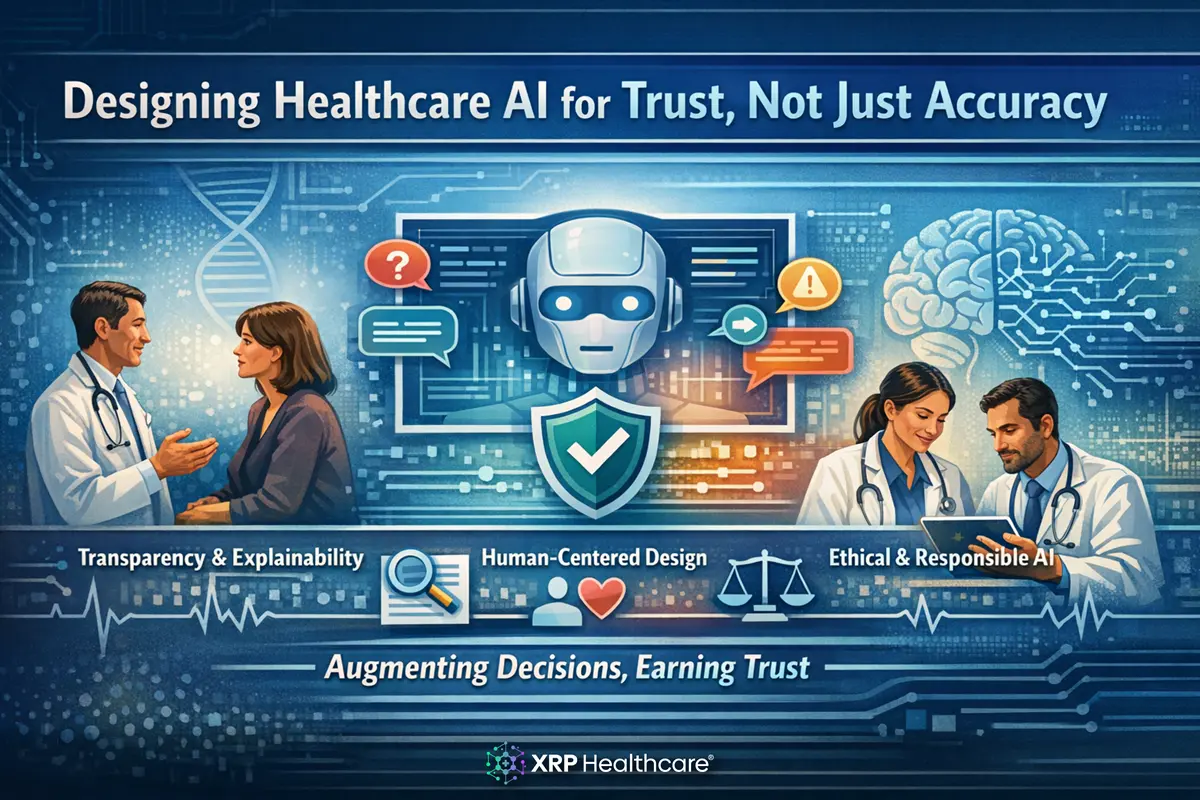
In healthcare, accuracy alone does not determine whether technology is adopted. Trust does. Many AI healthcare systems achieve impressive technical benchmarks, yet fail to gain meaningful use among patients, clinicians, or institutions. The reason is simple: healthcare decisions are not made by algorithms - they are made by people. And people require clarity, restraint, and confidence that technology is acting in their best interests.
XRPH AI is built on the principle that trust must be designed into healthcare AI from the start, not retrofitted after deployment.
Why Accuracy Is Not Enough in Healthcare AI
Accuracy measures how often an AI system produces the “correct” output under test conditions. Trust measures whether people feel safe acting on that output in real life. Healthcare AI often loses trust when it:
Produces answers without explanation
Appears overly confident or absolute
Fails to acknowledge uncertainty
Does not align with how care is actually delivered
In high-stakes environments like healthcare, blind confidence is a liability, not a strength.
The Human Factors That Shape Trust
Trust in healthcare AI is influenced by far more than technical performance. It is shaped by:
Tone - calm, measured, and non-alarmist communication
Transparency - clear boundaries on what AI can and cannot do
Explainability - guidance that users can understand, not just receive
Restraint - knowing when not to provide definitive answers
When these elements are missing, even accurate systems face resistance.
Designing AI That Supports, Not Replaces, Judgment
Healthcare AI should augment human decision-making, not attempt to override it. XRPH AI is designed with this philosophy at its core. Key design principles include:
Presenting information as guidance, not diagnosis
Encouraging professional consultation where appropriate
Avoiding false certainty in ambiguous situations
Respecting clinical pathways and patient autonomy
This approach ensures AI remains a supportive layer - not a competing authority.
Explainability as a Foundation of Responsible AI
Explainability is essential to trust. Users must understand why guidance is given, not just what the guidance is. XRPH AI emphasises:
Clear language over technical jargon
Logical reasoning aligned with healthcare standards
Contextual explanations that reflect user circumstances
By making its reasoning understandable, XRPH AI strengthens confidence and encourages informed decision-making.
Trust, Ethics, and Long-Term Adoption
Healthcare technology that prioritises trust is more likely to achieve sustainable adoption. Institutions, regulators, and users increasingly scrutinise not just what AI can do, but how it behaves. Trust-centric AI supports:
Higher engagement
Reduced misuse or over-reliance
Better alignment with ethical standards
Stronger long-term credibility
XRPH AI reflects this evolution - focusing on responsible design rather than short-term performance metrics.
Privacy & Healthcare-Grade Standards
XRPH AI is built to healthcare-grade standards, prioritising user privacy, ethical deployment, and responsible boundaries. The platform is designed to support early-stage guidance while respecting professional healthcare roles and regional frameworks. XRPH AI does not replace clinicians or medical diagnosis. It exists to improve understanding, access, and informed decision-making.
Related Reading
Why Healthcare AI Fails Without Local Context - And How XRPH AI Solves It
XRP Healthcare: Building Trustworthy, Patient-First AI for a Healthier Future
FAQs
Why is trust more important than accuracy in healthcare AI?
Because users must feel safe acting on guidance. Without trust, even accurate systems are ignored or rejected.
How does XRPH AI build trust with users?
By prioritising explainability, restraint, transparency, and alignment with real healthcare practices.
Can healthcare AI make final medical decisions?
No. XRPH AI supports understanding and early guidance but does not replace professional medical advice.