Introduction
Good health is influenced by everyday decisions.
The food we eat, the amount we sleep, our physical activity, hydration and stress management all contribute to our overall wellbeing.
While many people understand the importance of healthy habits, maintaining consistency can be challenging.
Artificial intelligence is helping make wellness support more accessible.
Instead of generic advice, AI-powered healthcare applications can provide personalised guidance, organise health goals and encourage healthier daily routines.
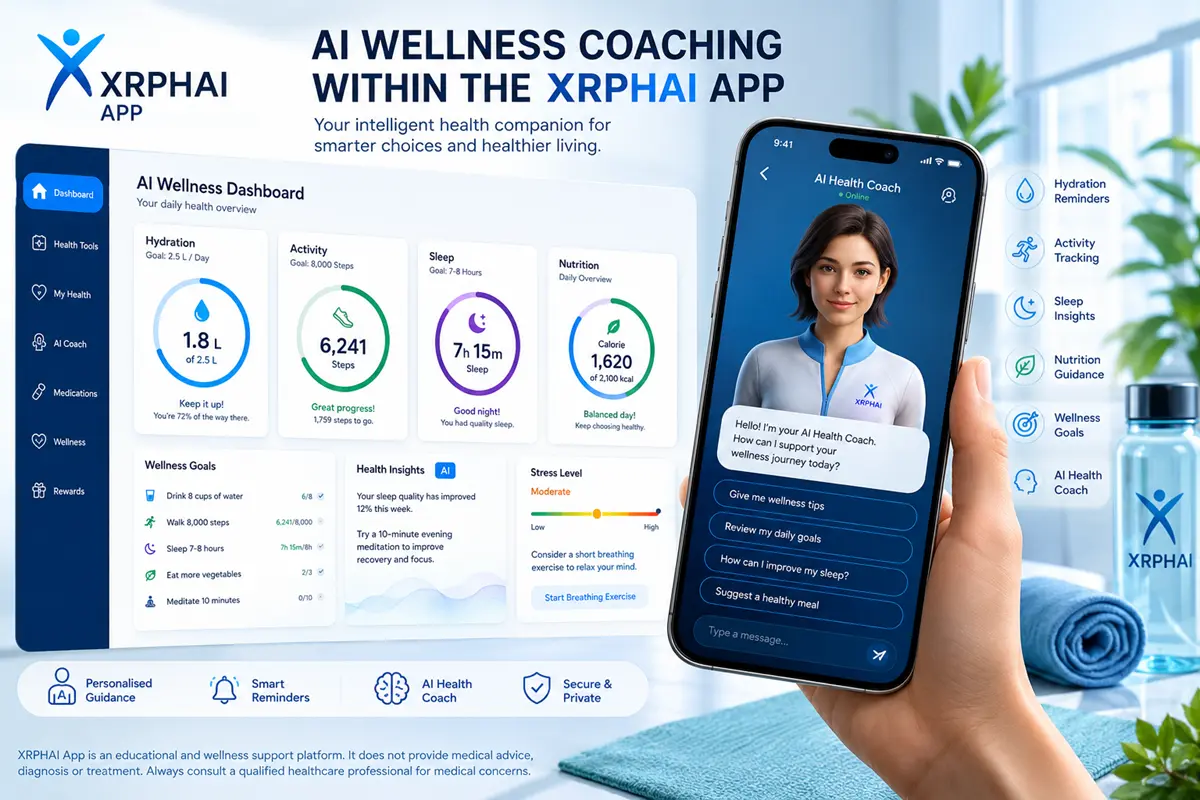
Within the XRPHAI App, AI wellness coaching forms part of a broader healthcare ecosystem that supports users through education, preventive healthcare and intelligent health management tools.
What Is AI Wellness Coaching?
AI wellness coaching uses artificial intelligence to provide personalised guidance that encourages healthier lifestyle habits.
Rather than offering one-size-fits-all recommendations, AI can help users organise wellness objectives based on their individual preferences and goals.
Examples may include:
- Daily activity goals.
- Hydration reminders.
- Sleep routine support.
- Nutrition education.
- Wellness check-ins.
- Healthy habit tracking.
- Preventive healthcare guidance.
The objective is to encourage sustainable improvements through consistent daily support.
Why Preventive Healthcare Matters
Preventive healthcare focuses on maintaining health before problems develop.
Healthy lifestyle choices can contribute to long-term wellbeing by encouraging positive daily habits.
Preventive healthcare often includes:
- Regular physical activity.
- Balanced nutrition.
- Adequate sleep.
- Hydration.
- Stress management.
- Routine health monitoring.
- Professional health screenings.
AI wellness coaching supports these behaviours by helping users remain engaged with their health goals.
How AI Personalises Wellness Support
Artificial intelligence can help tailor digital wellness experiences according to user preferences.
Depending on application functionality, AI may assist by:
- Organising wellness objectives.
- Tracking daily progress.
- Providing educational health content.
- Suggesting healthy routines.
- Encouraging consistency.
- Presenting personalised health insights.
The emphasis remains on supporting informed lifestyle decisions rather than replacing medical professionals.
The XRPHAI App Wellness Ecosystem
AI wellness coaching complements a growing collection of healthcare tools available within the XRPHAI App.
These include:
- AI Health Advisor.
- Medicine Guidance.
- Medication Reminders.
- Continue Health Journey.
- Doctor Finder.
- Medicine Verification.
- Preventive Healthcare.
- Personal healthcare education.
Together these features create an integrated digital healthcare experience that supports users throughout different stages of their health journey.
Building Healthy Habits
Long-term wellbeing is often shaped by small, consistent improvements rather than dramatic changes.
Examples include:
- Drinking enough water.
- Maintaining regular sleep patterns.
- Staying physically active.
- Following medication schedules.
- Attending healthcare appointments.
- Learning more about personal health.
AI wellness coaching helps users remain focused on these habits by providing ongoing encouragement and organisation.
AI Supports - It Does Not Replace - Healthcare Professionals
AI wellness coaching is intended to support healthy living.
It does not replace:
- Doctors.
- Nurses.
- Dietitians.
- Physiotherapists.
- Mental health professionals.
- Personal medical advice.
- Clinical diagnosis.
Healthcare decisions should always be made with qualified healthcare professionals.
AI serves as an educational and organisational support tool.
Looking Towards the Future
As artificial intelligence continues to evolve, wellness coaching is expected to become increasingly personalised.
Future AI healthcare applications may provide more intelligent wellness planning, personalised educational content and connected digital health experiences that help individuals take a more active role in managing their wellbeing.
The XRPHAI App is designed to support this future by combining AI-powered healthcare tools into one connected platform.
Personalised Wellness Journeys
AI wellness coaching becomes more useful when it supports an ongoing health journey rather than isolated advice.
A personalised wellness journey may bring together:
- Daily wellness goals.
- Hydration habits.
- Sleep routines.
- Physical activity.
- Nutrition education.
- Medication reminders.
- Preventive healthcare guidance.
- Progress check-ins.
The aim is to help users see how everyday actions connect over time.
Within the XRPHAI App, wellness coaching should work alongside Continue Health Journey so that users can return to their previous activity, review progress and continue building healthier routines.
Supporting Consistency
Healthy habits are often easier to start than maintain.
AI can help users remain consistent by providing structured support throughout the day.
Depending on live functionality, this may include:
- Timely prompts.
- Daily check-ins.
- Progress summaries.
- Habit reminders.
- Educational suggestions.
- Encouraging feedback.
These interactions should remain supportive rather than intrusive.
Users should be able to control which reminders they receive and how frequently they appear.
AI Wellness Coaching and Preventive Healthcare
Wellness coaching and preventive healthcare are closely connected.
Preventive healthcare focuses on reducing avoidable risk and encouraging people to take an active role in their wellbeing.
AI wellness tools can support this objective by helping users:
- Maintain regular health routines.
- Prepare for professional health screenings.
- Recognise when medical guidance may be appropriate.
- Organise lifestyle goals.
- Learn about preventive health topics.
- Continue previously started health journeys.
AI does not determine whether a user has a medical condition.
Its role is to support education, organisation and responsible engagement with healthcare.
Connecting Wellness With Other XRPHAI App Features
AI wellness coaching should not operate as an isolated feature.
It is most useful when connected with the wider XRPHAI App experience.
AI Health Advisor
Users can ask general health questions and receive educational guidance that helps them understand available next steps.
Continue Health Journey
Users can return to previous conversations and continue working towards their health and wellness goals.
Medication Reminders
Users managing prescribed medicines can receive organisational support alongside their wider wellness routines.
Doctor Finder
Where professional medical support is needed, users can search for appropriate healthcare providers.
Medicine Guidance
Users can access educational information about medicines while continuing to follow the instructions provided by qualified professionals.
Medicine Verification
Users can use supported verification tools to examine medicine and packaging information where available.
Preventive Healthcare
Wellness coaching can reinforce healthier habits and encourage greater engagement with preventive care.
Together, these features create a more connected and practical digital healthcare journey.
Privacy and User Control
Personal wellness information should be handled responsibly.
Users should remain in control of:
- Their wellness goals.
- Reminder preferences.
- Notification frequency.
- Personal information.
- Health journey history.
- Application permissions.
The XRPHAI App should clearly explain how user information is processed and protected.
Only the minimum information necessary to provide a feature should be collected, and users should be able to manage their settings easily.
Do not describe the app as storing clinical medical records unless that capability is specifically live and legally documented.
Avoiding Overdependence on AI
AI wellness coaching should encourage informed action rather than dependence.
The app should not imply that users must follow every AI-generated suggestion.
Users should be reminded to:
- Apply personal judgement.
- Consider their existing health conditions.
- Follow professional medical advice.
- Stop any activity that causes concern.
- Seek qualified help when symptoms are serious or persistent.
AI recommendations should remain educational and supportive.
They should never be presented as guaranteed health outcomes.
Wellness Support for Different Users
Different users have different goals.
Examples may include:
- Building a more consistent sleep routine.
- Drinking more water.
- Increasing daily movement.
- Improving general health education.
- Maintaining medication schedules.
- Preparing for a medical appointment.
- Supporting preventive healthcare habits.
AI wellness coaching should therefore remain flexible.
It should avoid assuming that every user has the same abilities, lifestyle, resources or health needs.
The Role of Voice and Accessibility
Voice interaction can make wellness coaching more accessible.
Users may prefer to speak rather than type when:
- Asking health questions.
- Reviewing daily goals.
- Recording progress.
- Requesting reminders.
- Continuing a previous health journey.
Multilingual and voice-enabled support can also help make digital healthcare more accessible across different regions and user groups.
Accessibility should remain part of the feature design rather than an afterthought.
Future AI Wellness Capabilities
Future development may include:
- More personalised health journeys.
- Voice-led wellness check-ins.
- Connected wearable insights.
- Improved habit tracking.
- Preventive health education.
- Multilingual coaching.
- Smarter reminder controls.
- Progress summaries.
- Personalised wellness content.
Any future capability should be published only when live or clearly labelled as planned.
Do not present roadmap functionality as currently available.
Responsible Healthcare Guidance
AI wellness coaching should always operate within clear safety boundaries.
The feature should not:
- Diagnose medical conditions.
- Prescribe medication.
- Replace emergency services.
- Override professional treatment plans.
- Promise specific medical outcomes.
- Encourage users to delay necessary care.
Where symptoms appear serious, urgent or persistent, users should be directed towards qualified healthcare support.
Conclusion
AI wellness coaching can help people turn general health intentions into more organised daily routines.
By supporting hydration, sleep, activity, health education and preventive healthcare engagement, intelligent wellness tools can make everyday health management easier to understand and maintain.
Within the XRPHAI App, wellness coaching works best as part of a connected healthcare experience that includes AI Health Advisor, Continue Health Journey, Medication Reminders, Doctor Finder, Medicine Guidance and other responsible digital health tools.
Artificial intelligence does not replace professional healthcare.
It helps users remain informed, organised and engaged as they take a more active role in their wellbeing.