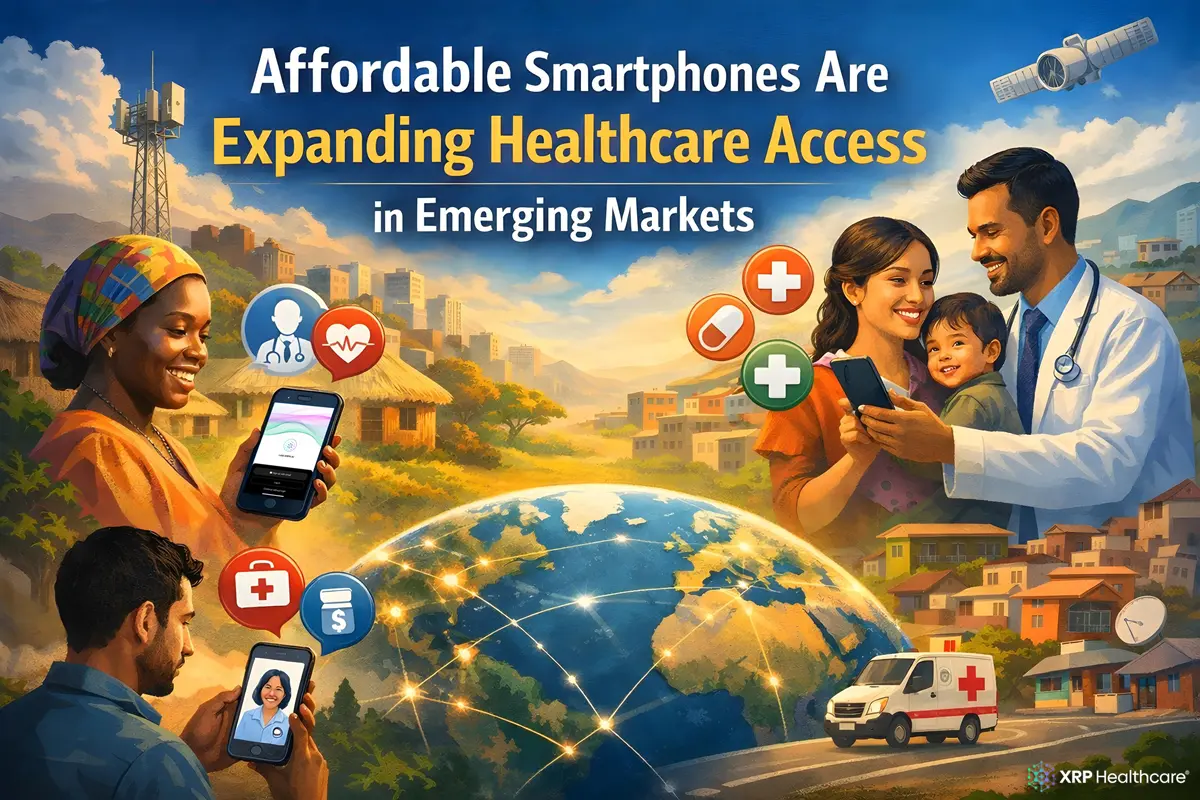
The global expansion of smartphones has been one of the most transformative developments of the digital era. Over the past decade, smartphones have become more affordable, more powerful, and more widely available across the world.
For many people in emerging markets, the smartphone has become the primary device for accessing the internet and digital services. Instead of relying on desktop computers or traditional infrastructure, billions of people now connect to the digital world through mobile devices.
This shift has profound implications for healthcare.
As smartphones become more accessible, digital healthcare platforms are increasingly able to reach individuals who may previously have had limited access to health information or medical services.
This evolution is closely connected to the rise of mobile-first healthcare, discussed in our guide to the XRPH AI healthcare platform.
The Rapid Growth of Affordable Smartphones
Smartphone technology has become significantly more affordable over the last decade.
Many modern smartphones now provide advanced computing capabilities at a fraction of the cost of earlier devices. Affordable Android devices in particular have enabled smartphone adoption to grow rapidly across emerging economies.
In many regions across Africa, Southeast Asia, and Latin America, smartphones have effectively leapfrogged traditional desktop computing.
Instead of building large-scale computer infrastructure, millions of people now access digital services directly through mobile networks.
This shift has helped create a global environment where smartphones function as the primary gateway to the digital economy.
Emerging Markets and Digital Connectivity
Emerging markets are now among the fastest-growing regions for smartphone adoption. Improved mobile network coverage and declining device costs have allowed millions of new users to connect to the internet for the first time.
Mobile connectivity has become essential for accessing services such as:
education
banking
digital commerce
communication
government services
Healthcare is now becoming part of this digital transformation. As smartphone connectivity expands, digital healthcare tools can reach communities that previously faced barriers to accessing healthcare information.
Smartphones and Healthcare Accessibility
Access to healthcare remains uneven across many regions of the world.
People may face obstacles such as:
long travel distances to clinics
limited availability of healthcare professionals
financial barriers to consultations
overcrowded healthcare systems
Smartphones provide an opportunity to bridge part of this gap by delivering healthcare information and digital support tools directly to individuals.
Mobile healthcare platforms can provide:
health education resources
symptom awareness tools
preventative care information
connections to healthcare providers
medication cost assistance programs
These tools can help individuals make more informed decisions about their health and understand when professional medical care may be needed.
The Role of Artificial Intelligence in Mobile Health
Artificial intelligence is playing an increasingly important role in digital healthcare systems.
AI-powered tools can help organize health information, guide users through structured health questions, and provide educational insights.
When integrated into mobile applications, AI allows digital healthcare platforms to provide accessible guidance at any time.
Importantly, these technologies are designed to complement traditional healthcare systems, not replace them.
AI-based health platforms help individuals better understand their health concerns and prepare for consultations with medical professionals when necessary.
XRPH AI and the Mobile Healthcare Ecosystem
XRPH AI operates within this rapidly expanding mobile healthcare environment. The platform has been designed to provide accessible digital health guidance through mobile devices.
Current XRPH AI capabilities include:
AI-powered healthcare guidance
multilingual interaction
image upload for visible health concerns such as skin or throat issues
CalmXRPH wellness support features
local doctor search tools
the XRP Healthcare Prescription Savings Card accepted at over 68,000 pharmacies across the United States
By leveraging smartphone technology, XRPH AI aims to help make healthcare information and support more accessible to users worldwide.
Privacy and Responsible Digital Healthcare
As digital healthcare systems expand, protecting user privacy becomes essential.
Healthcare information is sensitive, and digital platforms must be built with responsible security practices.
XRPH AI is designed with HIPAA-grade security standards and privacy-first architecture to help safeguard user data and protect sensitive information.
Trust and transparency are critical components of any digital healthcare platform.
The Future of Mobile Healthcare Access
The continuing expansion of affordable smartphones is expected to play a major role in the future of global healthcare access.
As mobile connectivity spreads and device costs continue to fall, digital healthcare platforms will be able to reach even larger populations.
This expansion has the potential to improve health awareness, provide earlier guidance, and help individuals connect with healthcare services more effectively.
Smartphones are already transforming industries such as finance and education. Healthcare is now beginning to follow the same path.
CONCLUSION
Affordable smartphones are helping reshape how individuals access information and services across the globe.
In emerging markets, where mobile devices often serve as the primary gateway to the internet, smartphones are becoming an increasingly important platform for healthcare guidance and digital health tools.
As mobile connectivity continues to grow, digital healthcare platforms such as XRPH AI are positioned to help expand access to health information and support.
The rise of affordable smartphones is not just a technology story - it is also a story about expanding opportunities for healthcare access worldwide.
FAQ
Why are smartphones important for healthcare access?
Smartphones provide affordable internet connectivity and mobile applications that allow users to access healthcare information and digital health services.
How are emerging markets adopting smartphones?
Emerging markets are experiencing rapid smartphone adoption due to declining device costs and expanding mobile network coverage.
How does XRPH AI use smartphones?
XRPH AI delivers AI-powered health guidance, multilingual support, doctor search features, and prescription savings tools through mobile devices.