Introduction
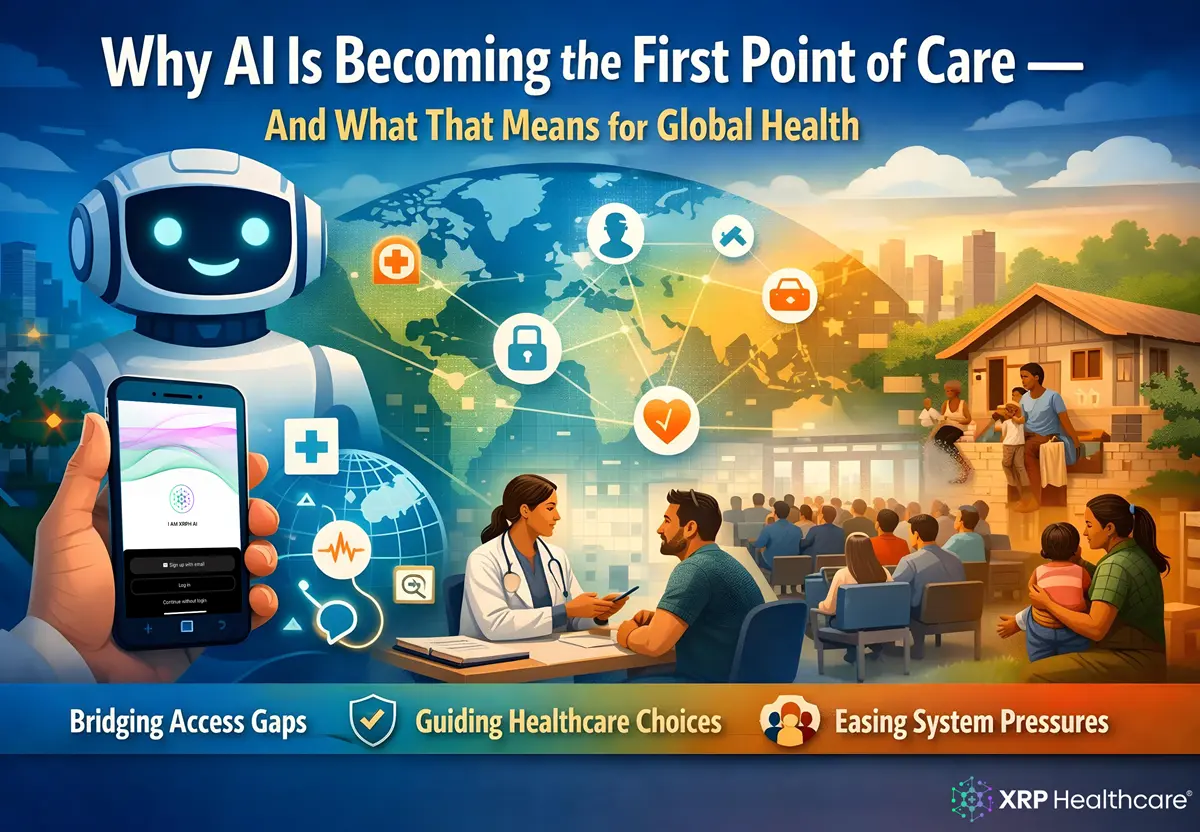
Healthcare is undergoing a quiet but profound shift. For millions of people worldwide, the first interaction with healthcare is no longer a clinic, a pharmacy, or a doctor - it is artificial intelligence. This change is not driven by novelty. It is driven by necessity. Access gaps, cost pressures, time constraints, and information asymmetry have pushed individuals to seek immediate guidance wherever it is available. AI has become the front door to healthcare, shaping how and when people decide to seek professional care.
XRPH AI is built with this reality in mind, recognising that the first point of care must be responsible, accessible, and designed to guide - not replace - healthcare systems.
The Rise of AI as a Front-Door Healthcare Layer
Across both developed and emerging markets, patients increasingly turn to AI before making healthcare decisions. This behaviour reflects structural pressures within healthcare systems rather than a rejection of traditional care.
Key drivers include:
Long wait times for appointments
Limited access to healthcare professionals
Rising healthcare costs
Desire for privacy and anonymity
Need for immediate, understandable information
AI meets users where they are - at the moment questions arise.
Behavioural Change, Not Just Technological Change
The shift toward AI as a first point of care is primarily behavioural. People are not seeking diagnosis; they are seeking clarity.
Common early-stage needs include:
Understanding whether symptoms are urgent
Knowing when professional care is appropriate
Learning how to describe symptoms accurately
Gaining reassurance or direction
AI platforms that recognise this role can meaningfully reduce friction in healthcare decision-making.
Why This Shift Matters for Global Health Systems
When AI acts as a responsible first layer, it can ease pressure on healthcare infrastructure rather than add to it.
Potential system-level benefits include:
Reduced unnecessary clinic visits
Better triage before professional care
Improved patient preparedness
More efficient use of healthcare resources
However, these benefits only emerge when AI is designed with restraint, context, and trust at its core.
XRPH AI’s Role as a Responsible Entry Point to Care
XRPH AI is designed to function as a supportive entry point, not a substitute for healthcare professionals.
Its approach emphasises:
Clear boundaries around medical advice
Context-aware guidance aligned with real access
Encouragement of professional care when appropriate
Calm, non-alarmist communication
By positioning AI as a guide rather than an authority, XRPH AI supports better outcomes for both users and healthcare systems.
The Future of First-Contact Healthcare
As healthcare systems evolve, the role of AI at the earliest stage of care will continue to grow. The question is not whether AI will be used first - but how responsibly it will be used. Platforms that prioritise trust, clarity, and ethical design will become integral to global healthcare access. Those that prioritise speed or certainty at the expense of responsibility risk undermining confidence and care outcomes. XRPH AI reflects a model where technology strengthens healthcare pathways rather than bypassing them.
Privacy & Healthcare-Grade Standards
XRPH AI is built to healthcare-grade standards with a strong emphasis on privacy, ethical use, and responsible deployment. The platform is designed to assist users in understanding health concerns while respecting professional medical roles and regional healthcare frameworks.
XRPH AI does not replace clinicians or provide diagnosis. It exists to improve access, understanding, and informed next steps.
Related Reading
FAQs
Why are people using AI before seeing a doctor?
Because AI offers immediate, accessible guidance when professional care is delayed, costly, or unavailable.
Does AI replace healthcare professionals?
No. Responsible AI supports early understanding and triage but does not replace professional diagnosis or treatment.
How does XRPH AI differ from generic symptom checkers?
XRPH AI prioritises context, restraint, and guidance aligned with real healthcare pathways rather than absolute answers.