Living with a long-term health condition often involves much more than attending an occasional medical appointment.
People may need to manage medication, monitor changes in how they feel, prepare questions for healthcare professionals, attend follow-up appointments and maintain healthier daily routines.
These responsibilities can become difficult to organise, particularly when someone is managing more than one condition.
Artificial intelligence can provide practical support.
AI-powered healthcare applications can help users organise information, continue previous health conversations, prepare for appointments and remain engaged with their care plans.
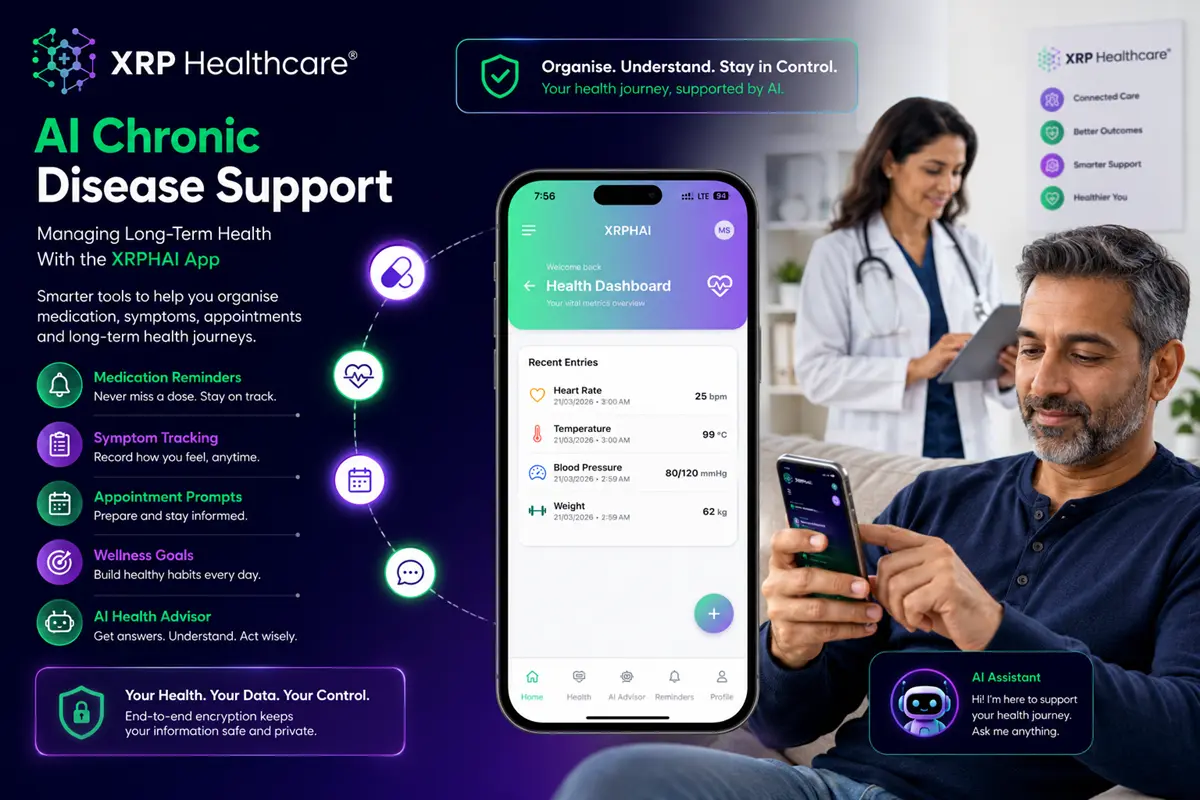
Within the XRPHAI App, AI chronic disease support can connect with tools such as AI Health Advisor, Medication Reminders, Continue Health Journey, Doctor Finder, Medicine Guidance and preventive healthcare features.
The objective is not to automate medical care.
It is to help users become more informed, organised and prepared while qualified healthcare professionals remain responsible for diagnosis and treatment.
What Is a Chronic Health Condition?
A chronic health condition is a condition that continues over a long period and may require ongoing medical attention, lifestyle management or both.
Examples can include:
Diabetes
High blood pressure
Cardiovascular conditions
Asthma
Chronic respiratory conditions
Arthritis
Long-term pain
Kidney conditions
Neurological conditions
Autoimmune conditions
The experience of living with a chronic condition varies significantly from one person to another.
Some people manage one condition.
Others manage several conditions alongside different medicines, specialists and healthcare appointments.
Chronic disease self-management programmes can help people build the knowledge and confidence required to manage daily health responsibilities alongside professional care.
What Is AI Chronic Disease Support?
AI chronic disease support refers to digital tools that help users organise and understand aspects of living with a long-term condition.
Depending on confirmed app functionality, AI may help users:
Organise medication reminders
Record questions for healthcare professionals
Continue previous health conversations
Review general educational information
Prepare for appointments
Track user-entered symptoms or concerns
Maintain wellness routines
Find relevant healthcare providers
Understand possible next steps
These tools should support daily self-management without making independent clinical decisions.
Why Long-Term Conditions Require Continuity
A chronic condition is rarely managed through one isolated conversation.
Care may involve:
Regular appointments
Medication reviews
Laboratory tests
Lifestyle adjustments
Monitoring by healthcare professionals
Specialist referrals
Ongoing health education
Follow-up questions
Continuity helps users understand what has already happened and what they may need to do next.
The Continue Health Journey feature can support this process by helping users return to previous interactions instead of beginning every health conversation again.
How AI Can Support Everyday Organisation
Managing a chronic condition often involves small but important tasks.
AI can help bring these responsibilities into a more organised digital experience.
Medication Organisation
Users may need to remember several medications with different schedules.
AI-powered medication reminders can help users organise those routines while continuing to follow the instructions provided by their doctor or pharmacist.
Appointment Preparation
Before an appointment, users may want to organise:
Symptoms they have noticed
Questions they want to ask
Medication concerns
Changes in their routine
Previous healthcare guidance
AI can help structure this information so users arrive better prepared.
Health Education
Users may need general explanations of medical terminology, medicines or healthcare processes.
AI can make this information easier to understand while clearly distinguishing education from professional medical advice.
Follow-Up Support
After an appointment, users may need help remembering the next steps recommended by their healthcare professional.
The app can support organisation without changing or interpreting the treatment plan independently.
Supporting Chronic Disease Self-Management
Self-management refers to the actions people take each day to live with and manage a long-term condition.
This may include:
Following prescribed treatment
Attending appointments
Maintaining healthy routines
Recognising important changes
Asking informed questions
Seeking help when necessary
Learning more about the condition
Technology-based support can help people remain connected and engaged with self-management plans, but it works best as part of a wider care relationship involving healthcare professionals.
The Role of the XRPHAI App
The XRPHAI App can bring several forms of digital support into one connected experience.
AI Health Advisor
Users can ask general health questions and receive educational guidance that helps them understand relevant topics and possible next steps.
Continue Health Journey
Users can return to earlier interactions, maintain context and continue longer-term health conversations.
Medication Reminders
Users can organise reminders around medication schedules supplied by qualified healthcare professionals.
Medicine Guidance
Users can access general educational information relating to medicines without changing prescribed treatment.
Doctor Finder
Users can look for relevant healthcare professionals when an in-person or remote consultation may be appropriate.
AI Health Notifications
Users can receive selected reminders relating to appointments, medication routines, follow-up tasks or health journeys.
AI Wellness Coaching
Users can organise lifestyle and wellness goals that complement their professional care plan.
Together, these features can support a more continuous and organised healthcare experience.
AI Support for Multiple Long-Term Conditions
Some users manage more than one chronic condition.
This can create additional complexity because each condition may involve:
Different medications
Different specialists
Different appointments
Different lifestyle recommendations
Different warning signs
Different follow-up schedules
AI can help organise user-entered information into clearer categories.
However, the app should never assume that advice for one condition is automatically appropriate for another.
Where conditions or treatments interact, users should be directed towards a qualified healthcare professional.
Medication Support Without Changing Treatment
Medication management is often central to chronic care.
AI can support users by helping them:
Organise reminder times
Record medication questions
Review general medicine information
Prepare for pharmacist or doctor conversations
Remember scheduled medication reviews
The app should never instruct users to:
Increase a dose
Reduce a dose
Stop medication
Replace one medicine with another
Combine treatments without professional advice
Any concern about medication should be discussed with a doctor, pharmacist or other qualified professional.
Recognising Changes and Seeking Help
People living with long-term conditions may notice changes in symptoms over time.
AI can help users organise what they have experienced and prepare to discuss it with a healthcare professional.
It should not independently determine whether a condition has worsened.
Users should seek professional medical help when:
Symptoms are new or worsening
Medication causes concerning effects
A healthcare professional has advised follow-up
Daily activities are becoming more difficult
The user is uncertain about treatment
Symptoms feel serious or urgent
Emergency symptoms require immediate professional assistance through local emergency services.
Personalisation With Clear Limits
AI support can become more relevant when users choose to provide information about their goals, routines and previous interactions.
Personalised support may include:
Preferred reminder times
Selected wellness goals
Frequently discussed health topics
Saved appointment questions
Continued health journeys
Notification preferences
Personalisation does not mean the app possesses a complete clinical understanding of the user.
AI-generated information should not be described as a clinically personalised treatment plan unless that capability has been formally validated and documented.
Privacy and Long-Term Health Information
Information relating to chronic conditions can be highly sensitive.
Users should remain in control of:
What information they enter
Which conversations they continue
Notification settings
App permissions
Device security
Whether information is retained
The app should clearly explain how information is processed and protected.
Health-related details should not appear openly in notifications unless the user has explicitly selected that preference.
Digital Health Should Remain Accessible
Chronic conditions affect people across different ages, languages, locations and levels of technical confidence.
Digital support should therefore be designed around accessibility.
Important considerations include:
Clear language
Simple navigation
Voice interaction
Multilingual support
Readable text
Flexible reminders
Easy privacy controls
Low-friction access to professional care
Digital health should reduce complexity rather than create another burden.
AI Supports-It Does Not Replace-Long-Term Medical Care
AI chronic disease support is an educational and organisational tool.
It does not replace:
Doctors
Nurses
Pharmacists
Specialists
Clinical monitoring
Laboratory testing
Prescribed treatment
Emergency services
Healthcare professionals remain responsible for diagnosis, treatment and clinical decision-making.
AI can help users arrive better prepared, follow agreed routines and remain engaged between professional healthcare interactions.
Looking Towards the Future
Digital health and AI are increasingly being explored as tools for supporting the prevention and management of noncommunicable diseases, but effective implementation requires evidence, safety, accessibility and integration with healthcare systems.
Future chronic disease support may include:
More connected health journeys
Better appointment preparation
Voice-enabled health support
Multilingual education
Wearable-device integrations
Smarter user-controlled reminders
Improved progress summaries
Easier professional referrals
Any future functionality should be clearly labelled as planned until it is available.
Conclusion
Managing a chronic health condition often requires ongoing organisation, education and communication.
Artificial intelligence can help users bring medication schedules, appointment preparation, health questions, reminders and longer-term health journeys into a more connected digital experience.
Within the XRPHAI App, AI chronic disease support can work alongside AI Health Advisor, Continue Health Journey, Medication Reminders, Doctor Finder, Medicine Guidance, AI Health Notifications and Wellness Coaching.
AI does not replace healthcare professionals or make treatment decisions.
It helps users remain organised, informed and better prepared as they manage long-term health alongside qualified medical care.
Stay Connected to Your Long-Term Health Journey
Explore AI-powered healthcare tools designed to help organise medication routines, prepare for appointments, continue previous health conversations and support everyday chronic disease self-management.
FAQ
What is AI chronic disease support?
AI chronic disease support uses artificial intelligence to help users organise medication schedules, appointments, educational information and long-term healthcare routines.
Can AI treat chronic diseases?
No. AI cannot diagnose or treat chronic illnesses. It provides organisational and educational support alongside professional healthcare.
How can AI help people living with chronic conditions?
AI can help users manage reminders, organise appointments, prepare healthcare questions, continue health journeys and access educational information.
Does AI replace doctors or specialists?
No. Healthcare professionals remain responsible for diagnosis, treatment and ongoing medical care.
Can AI remind users about medication?
Yes. Where supported by the app, users can organise medication reminders while continuing to follow professional medical advice.
How does the XRPHAI App support long-term healthcare?
The XRPHAI App combines AI Health Advisor, Continue Health Journey, Medication Reminders, Doctor Finder, Medicine Guidance, AI Wellness Coaching and AI Health Notifications into one connected healthcare experience.
Is the XRPHAI App suitable for emergencies?
No. Emergency symptoms require immediate professional medical attention through local emergency services.