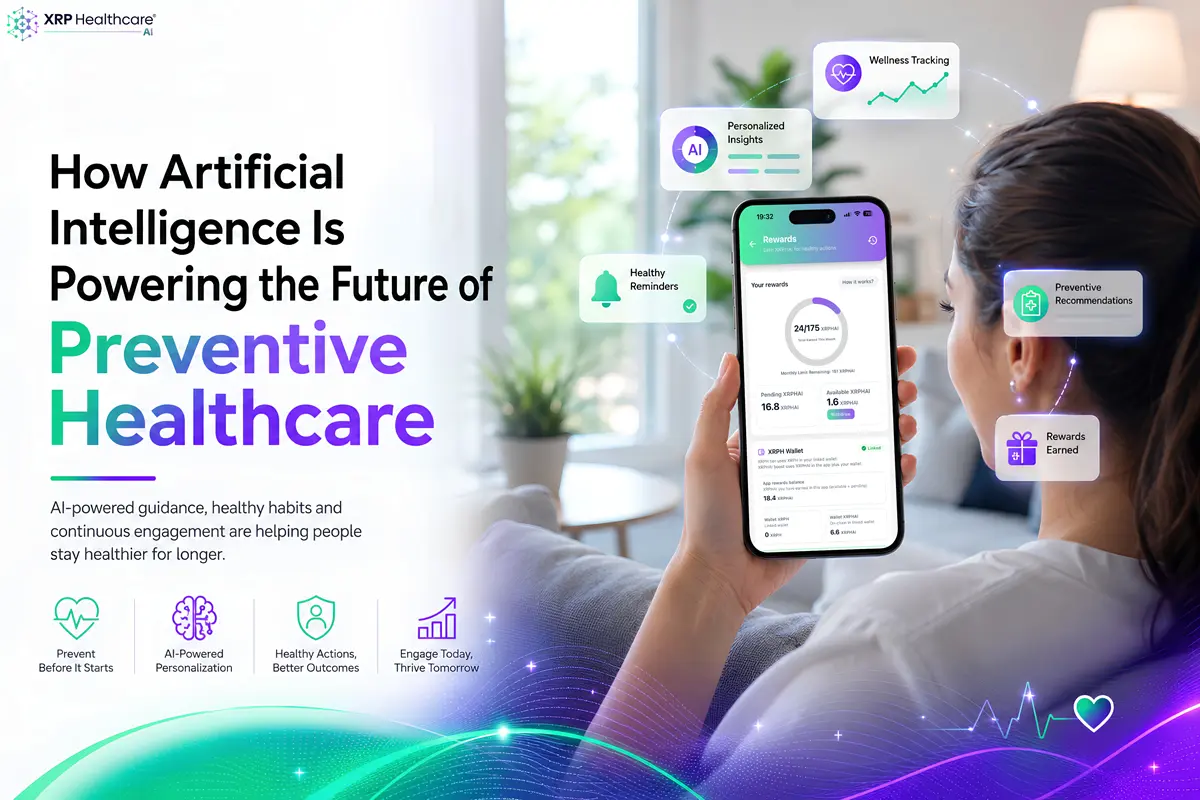
Healthcare Has Traditionally Focused on Treatment
For much of modern history, healthcare has focused primarily on treating illness after it appears.
Someone develops symptoms.
They visit a healthcare professional.
A diagnosis is made.
Treatment begins.
This approach has transformed medicine and continues to save millions of lives every year.
Yet healthcare systems around the world increasingly recognise that long-term health depends on something equally important:
Preventing illness before it develops.
This philosophy is known as preventive healthcare.
Rather than waiting until disease occurs, preventive healthcare encourages healthier lifestyles, earlier intervention and continuous engagement with personal wellbeing.
Artificial intelligence is now becoming one of the technologies helping accelerate this transformation.
Healthcare Is Moving Upstream
Many of today's most significant health challenges are influenced by everyday behaviour.
- Cardiovascular disease
- Type 2 diabetes
- Obesity
- Hypertension
- Stress-related conditions
- Sleep disorders
- Mental wellbeing
While genetics and medical care remain important, daily habits often play a major role in determining long-term health outcomes.
This creates an opportunity.
Instead of focusing exclusively on treating disease, healthcare can increasingly help people remain healthier through education, engagement and early action.
Artificial intelligence makes this approach more accessible by providing personalised support throughout everyday life.
Prevention Begins Long Before Illness
Preventive healthcare is often misunderstood.
Many people associate it only with health screenings or annual medical check-ups.
In reality, prevention begins much earlier.
It includes:
- Maintaining healthy nutrition
- Managing stress
- Regular physical activity
- Quality sleep
- Health education
- Mental wellbeing
- Routine monitoring
- Understanding personal risk factors
- Building healthier habits consistently over time
Artificial intelligence has the potential to support every one of these areas by helping individuals remain actively engaged with their health between traditional healthcare appointments.
Why Behaviour Matters
Medical knowledge alone rarely changes behaviour.
Most people already know they should:
- Exercise more
- Sleep better
- Reduce stress
- Eat healthier food
The challenge is maintaining these habits consistently.
Behavioural science has demonstrated that people are far more likely to succeed when they receive:
- Regular encouragement
- Visible progress
- Simple next steps
- Positive reinforcement
- Achievable goals
Artificial intelligence enables healthcare platforms to provide these experiences continuously rather than occasionally.
Instead of waiting until a problem develops, healthcare can become part of everyday life.
Artificial Intelligence Makes Prevention Personal
No two people have identical healthcare needs.
A university student experiences different challenges from a retiree.
Parents focus on different priorities than elite athletes.
Someone managing blood pressure requires different support from someone interested in improving sleep.
Artificial intelligence allows healthcare experiences to become increasingly personalised.
Rather than presenting generic recommendations, intelligent healthcare systems can provide guidance that reflects individual goals, preferences and ongoing engagement.
This creates healthcare experiences that become more useful over time while remaining easy to understand.
From Healthcare Information to Healthcare Action
Healthcare information has never been more accessible.
- Thousands of articles
- Videos
- Podcasts
- Medical websites
- Educational resources
Yet information alone rarely improves health.
The real challenge is turning knowledge into action.
Artificial intelligence helps bridge this gap by encouraging users to move naturally from learning to doing.
Rather than simply explaining healthy behaviours, intelligent healthcare platforms can recommend practical next steps that fit within each person's ongoing healthcare journey.
This creates a more engaging healthcare experience while helping individuals apply knowledge consistently over time.
Continuous Engagement Creates Better Opportunities
One of the greatest advantages of artificial intelligence is continuity.
Healthcare is no longer limited to occasional appointments.
Digital platforms can now encourage regular interaction through wellness activities, educational resources, health assessments and intelligent guidance.
Each interaction becomes another opportunity to support healthier long-term behaviours.
Instead of healthcare becoming something people think about only when they become ill, it becomes part of everyday life.
That shift may become one of the defining changes in modern healthcare over the coming decade.
AI Health Advisors and Preventive Healthcare
Preventive healthcare is most effective when it becomes part of everyday life rather than an occasional event.
This is where AI Health Advisors have the potential to make a meaningful contribution.
Rather than simply responding to questions, AI Health Advisors can encourage individuals to remain engaged with their health by providing intelligent guidance throughout their wellness journey.
Instead of asking users to decide what to do next, artificial intelligence can recommend appropriate actions based on previous engagement, current priorities and available healthcare resources.
Examples may include:
- Continuing a health assessment
- Exploring educational healthcare content
- Managing stress through wellbeing activities
- Discovering healthcare providers
- Learning about medication savings
- Continuing a personalised wellness journey
By helping users take the next positive step, artificial intelligence supports long-term preventive healthcare rather than isolated healthcare interactions.
Prevention Is Built Through Healthy Daily Actions
Many of the world's leading health challenges develop gradually over many years.
Likewise, many improvements in health are achieved through small actions repeated consistently.
- Walking regularly
- Sleeping better
- Managing stress
- Learning about personal health
- Remaining physically active
- Seeking healthcare advice earlier
- Monitoring personal wellbeing
Each action may appear relatively small.
Collectively, however, these behaviours often have a profound impact on long-term health.
Artificial intelligence provides an opportunity to encourage these healthy actions through continuous engagement, positive reinforcement and personalised guidance.
The objective is not perfection.
It is sustainable progress.
Healthcare Should Feel Connected
Healthcare can often appear fragmented.
People may use one application for health information, another for appointments, another for wellbeing and another for prescriptions.
Artificial intelligence has the potential to bring these experiences together.
Rather than acting as isolated services, healthcare resources can become part of one connected ecosystem where intelligent guidance helps users move naturally between different aspects of their healthcare journey.
This creates a simpler experience while helping individuals gain greater value from the healthcare tools available to them.
Connected healthcare also reduces unnecessary complexity, making digital health more accessible to a wider range of users.
The Healthcare Intelligence Layer
As healthcare ecosystems continue to expand, the real innovation is no longer the number of features available.
The innovation lies in how intelligently those features work together.
A Healthcare Intelligence Layer enables artificial intelligence to connect healthcare services into one coordinated experience.
Instead of repeatedly asking users to choose where they should go next, intelligent systems can recommend relevant actions based on context, previous engagement and personal healthcare goals.
This transforms digital healthcare from a collection of independent tools into a personalised healthcare journey.
The emphasis shifts from technology to meaningful user experience.
Artificial Intelligence Complements Healthcare Professionals
Artificial intelligence is not designed to replace qualified healthcare professionals.
Doctors, nurses, pharmacists and other healthcare specialists remain essential for diagnosis, treatment and clinical decision-making.
AI complements healthcare by helping people remain engaged between clinical interactions.
It can:
- Encourage education
- Promote preventive healthcare
- Simplify healthcare navigation
- Improve access to digital health resources
- Support healthier daily behaviours
This partnership between human expertise and intelligent technology has the potential to improve healthcare accessibility while allowing healthcare professionals to focus on the areas where human judgement remains indispensable.
Building the Future of Healthcare Engagement
The future of healthcare is likely to become increasingly proactive rather than reactive.
Artificial intelligence enables healthcare platforms to support people throughout their everyday lives instead of only during periods of illness.
As intelligent guidance continues to improve, healthcare will become more personalised, more accessible and more closely aligned with each individual's changing needs.
Rather than viewing healthcare as something that begins when illness appears, future healthcare systems may increasingly support people before problems develop.
This represents one of the most important opportunities in digital healthcare.
XRP Healthcare's Vision
XRP Healthcare believes artificial intelligence can help make healthcare more proactive, more accessible and more engaging.
Through the XRPH AI App, users already have access to AI-powered health assessments, Doctor Finder, Prescription Savings, CalmXRPH, Proof Of Health™ and additional healthcare engagement tools that encourage healthier daily participation.
As the platform continues to evolve, intelligent guidance is expected to play an increasingly important role in helping users navigate these services through personalised recommendations and connected healthcare journeys.
The Company's long-term vision is to build an AI-powered healthcare engagement ecosystem that helps individuals take greater control of their health while making valuable healthcare resources easier to access.
Conclusion
Preventive healthcare has the potential to become one of the defining priorities of modern medicine.
Artificial intelligence is helping accelerate this transformation by encouraging healthier daily habits, improving healthcare accessibility and supporting continuous engagement.
Rather than waiting until illness develops, intelligent healthcare platforms can help individuals remain actively involved in managing their wellbeing throughout every stage of life.
By combining artificial intelligence, behavioural science and connected healthcare experiences, preventive healthcare is becoming more personalised, more engaging and more effective than ever before.
The future of healthcare is not simply about treating illness.
It is about helping people stay healthier for longer.
Frequently Asked Questions
What is preventive healthcare?
Preventive healthcare focuses on reducing the risk of illness through healthy lifestyle choices, early intervention, education and regular engagement with healthcare services before serious health problems develop.
How can artificial intelligence improve preventive healthcare?
Artificial intelligence can encourage healthier daily habits, personalise healthcare guidance, simplify healthcare navigation and help individuals remain consistently engaged with their health.
Can AI replace doctors in preventive healthcare?
No. Artificial intelligence complements healthcare professionals by improving education, accessibility and engagement. Clinical diagnosis and treatment remain the responsibility of qualified healthcare professionals.
Why is continuous healthcare engagement important?
Continuous engagement encourages people to participate actively in managing their health through regular interaction, education and preventive healthcare rather than only seeking care when they become ill.
How is XRP Healthcare supporting preventive healthcare?
XRP Healthcare is developing AI-powered healthcare engagement technologies through the XRPH AI App, including intelligent health assessments, healthcare navigation, wellbeing tools, Doctor Finder, Prescription Savings, CalmXRPH and Proof Of Health™.
