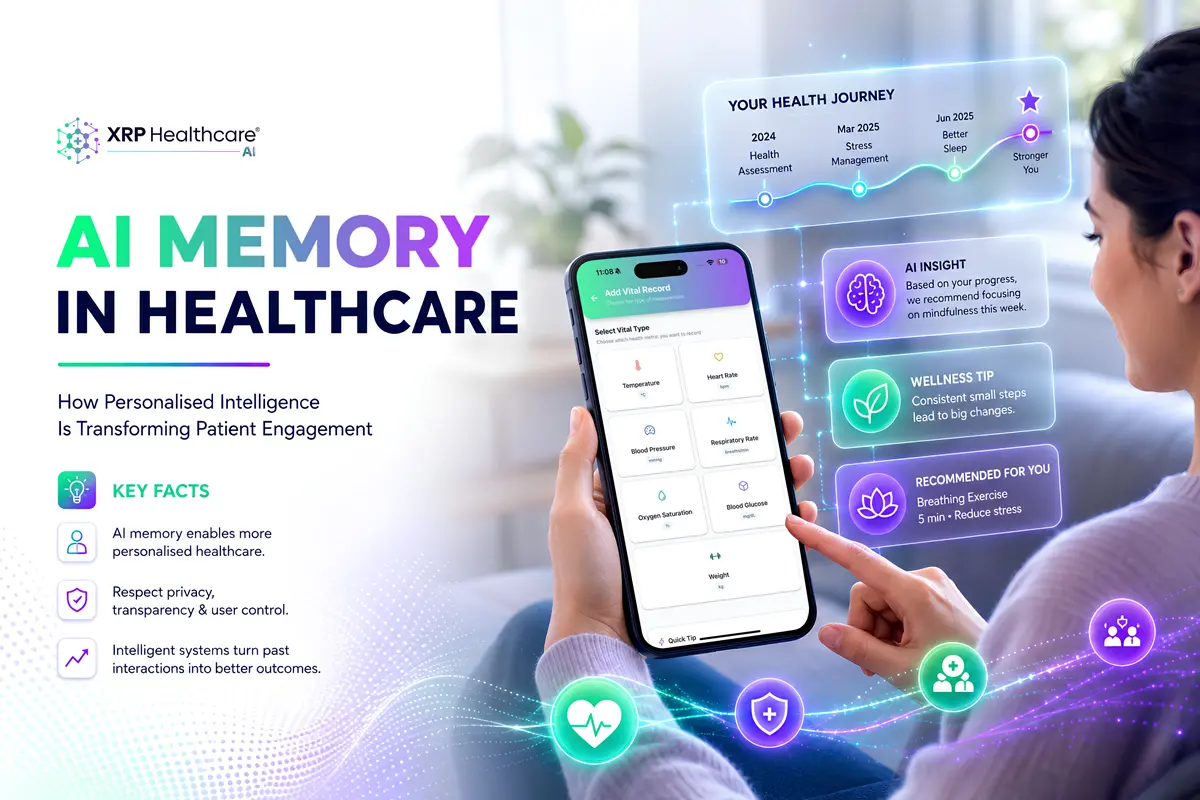
人工知能(AI)は、医療のあり方を急速に変えています。
初期のAIシステムは、質問への回答、情報検索、そして反復的な作業の自動化を主な目的としていました。
しかし、次世代の医療AIは、単に質問に答えるだけではありません。
よりパーソナライズされた医療体験を提供する方向へ進化しています。
この変革を支える重要な技術の一つがAI Memory(AIメモリー)です。
AI Memoryは、すべてのやり取りを新しいものとして扱うのではなく、これまでの会話、ユーザーの好み、そして長期的な健康管理の歩みを理解し、時間の経過とともに、より関連性の高いサポートを提供します。
適切に設計・運用されたAI Memoryは、より自然で、有益かつ価値の高いデジタルヘルスケア体験を実現します。
医療は継続的な信頼関係によって成り立っています
人々が信頼できる医療従事者を高く評価する理由の一つは、継続性にあります。
医師はこれまでの診療内容を把握しています。
医療従事者は患者の長期的な健康履歴を理解しています。
患者は診察のたびに、自分の状況を最初から説明し直す必要はほとんどありません。
この継続性が信頼を築きます。
そして、より質の高いコミュニケーションと医療判断につながります。
従来のデジタルヘルスケアは、このような体験を再現することが難しいという課題を抱えていました。
多くのヘルスケアアプリは、毎回の利用を独立したものとして扱います。
ユーザーは同じ質問に何度も回答しなければなりません。
健康管理の進捗も継続的に反映されないことが少なくありません。
その結果、提供されるアドバイスは一般的なものになりがちです。
人工知能は、この状況を大きく変え始めています。
単発のセッションから継続的な健康管理へ
従来のソフトウェアは、セッション単位で動作します。
ユーザーがタスクを完了すると、
そのやり取りは終了します。
しかし、健康管理はそのような仕組みではありません。
健康状態は常に変化し続けます。
目標も変わります。
健康状態は改善することもあれば、
新たな課題が生まれることもあります。
人工知能は、時間の経過とともに変化するユーザーの健康管理状況を理解し、その継続的な健康の歩みをサポートできます。
それぞれの利用を独立して扱うのではなく、インテリジェントなヘルスケアプラットフォームは、これまでの利用履歴や進捗に基づいて、より適切なサポートを提供できます。
その結果、利用するほど価値が高まる医療体験が実現します。
パーソナライゼーションは健康へのエンゲージメントを高めます
医療は非常に個別性の高い分野です。
大学生。
子育て中の保護者。
プロアスリート。
糖尿病と向き合う人。
予防医療に関心を持つ高齢者。
それぞれに必要な健康サポートは異なります。
人工知能は、不要な情報でユーザーを混乱させることなく、一人ひとりに合わせた医療サポートを提供できます。
すべての機能を一律に表示するのではなく、その時点で最も重要な医療リソースやサービスを優先的に案内できます。
これにより、医療サービスはより利用しやすくなり、ユーザーの継続的な利用も促進されます。
なぜコンテキスト(文脈)が重要なのか
人と人との会話は常に文脈に基づいて進みます。
例えば、誰かが友人に「最近運動を始めた」と話せば、その後の会話は自然とその情報を前提に続いていきます。
医療も同じであるべきです。
人工知能は、これまでのやり取りを理解し、その文脈を活用することで、より価値のある医療サポートを提供できます。
例えば、ストレス管理コンテンツを継続的に利用している人には、その後、睡眠改善やマインドフルネス、長期的なウェルビーイングに関する提案を行うことができます。
また、予防医療に関心のあるユーザーには、これまでの健康評価や学習内容をもとに、より適切な健康ガイダンスを提供できます。
コンテキストは、単発のやり取りを継続的で意味のある健康管理の旅へと変えていきます。
責任あるAIには責任あるAI Memoryが必要です
人工知能システムが進化するにつれて、ユーザーのプライバシー保護はこれまで以上に重要になっています。
責任あるAI Memoryは、常に透明性、ユーザーによるコントロール、そして適切なセキュリティを基盤として設計されるべきです。
AI Memoryの目的は、ユーザーを監視することではありません。
その目的は、不必要な繰り返しを減らし、より関連性の高い医療ガイダンスを提供することで、ユーザー体験を向上させることです。
ユーザーは自分の情報がどのように利用されるのかを理解し、自身の健康データやヘルスケア体験を主体的に管理できなければなりません。
信頼は、今後のデジタルヘルスケアにおいても最も重要な基盤であり続けます。
情報提供からインテリジェントなヘルスケア支援へ
これまでのヘルスケアアプリは、主に情報を提供することを目的としてきました。
しかし、次世代のAI搭載ヘルスケアプラットフォームは、その役割をさらに発展させようとしています。
単に質問へ回答するだけでなく、インテリジェントなシステムはユーザーが次のようなことを実現できるよう支援します。
健康的な生活への取り組みを継続すること。
必要な医療リソースを見つけること。
予防医療サービスを活用すること。
健康的な生活習慣を維持すること。
長期的な健康目標に継続して取り組むこと。
人工知能は、単なる情報提供ツールから、インテリジェントな健康パートナーへと進化しています。
これは、現在のデジタルヘルスケアにおける最も重要な変革の一つです。
AI MemoryからAI Health Advisorへ
人工知能は、単に情報を記憶するだけでなく、人々が健康のために前向きな行動を取れるよう支援することで、さらに大きな価値を発揮します。
これこそが、AI Health Advisorが示す次世代デジタルヘルスケアの姿です。
AI Health Advisorは受動的なアシスタントではなく、関連する医療リソースを提案し、ウェルネス活動をサポートし、長期的な健康への取り組みを継続できるよう導くインテリジェントなデジタルヘルスケアアシスタントです。
その目的は、医師や医療従事者を置き換えたり、医療上の判断を下したりすることではありません。
むしろ人工知能は、医療サービスをより利用しやすくし、人々が日々の健康管理へ積極的に取り組めるよう支援する役割を担います。
これにより、ユーザーは既存のデジタルヘルスケアサービスをより効果的に活用し、より価値の高い医療体験を得ることができます。
Healthcare Intelligence Layer(ヘルスケア・インテリジェンス・レイヤー)
デジタルヘルスケアプラットフォームが進化し続ける中で、新たな課題が明らかになっています。
機能を増やすことが、必ずしも優れたユーザー体験につながるわけではありません。
本当に優れた体験は、それぞれの機能がインテリジェントに連携することで実現されます。
そこで重要な役割を果たすのが、Healthcare Intelligence Layerです。
AIはユーザーの状況や健康状態を理解し、それぞれ独立していた医療サービスをつなぎ合わせ、最適な次のステップを提案します。
例えば、ユーザーが健康評価を完了すると、システムは健康教育コンテンツ、ストレス管理リソース、医療専門家、またはその他のウェルネスサービスへ自然に案内できます。
これらの提案はすべて、これまでの健康管理状況に基づいて行われるため、個別の機能ではなく、一貫した健康管理の流れを提供します。
その結果、より直感的で使いやすく、ストレスの少ないデジタルヘルスケア体験が実現します。
人工知能は医療における負担を軽減できます
医療サービスを利用する際、人々は数多くの意思決定を行わなければなりません。
どの医療サービスを利用すべきだろうか。
何から始めればよいのだろうか。
次に何をすればよいのだろうか。
自分に本当に必要な情報は何だろうか。
人工知能は、不必要な複雑さを取り除くことで、こうした意思決定をより簡単にする可能性があります。
複数のメニューを操作したり、必要な機能を探し回ったりする代わりに、インテリジェントなヘルスケアプラットフォームは、必要なタイミングで最適な医療リソースへとユーザーを導くことができます。
こうした負担の軽減は、ユーザーのエンゲージメントを高め、医療サービスをより分かりやすく、利用しやすいものにします。
行動変容は継続することから生まれます
長期的な健康は、一度の大きな出来事によって実現されることはほとんどありません。
むしろ、何百回、何千回と繰り返される小さな行動の積み重ねによって築かれます。
定期的に健康チェックを受けること。
ストレスを適切に管理すること。
睡眠の質を改善すること。
栄養について学ぶこと。
自身の健康状態を継続的に把握すること。
身体を継続的に動かすこと。
人工知能は、「完璧」を求めるのではなく、「継続」を支援することで、こうした健康的な行動を後押しできます。
急激なライフスタイルの変化を求めるのではなく、インテリジェントなヘルスケアプラットフォームは、日常生活に自然に取り入れられる持続可能な健康習慣づくりを支援します。
小さな改善を継続することが、長期的には大きな健康効果につながることが少なくありません。
責任ある人工知能によって信頼を築く
人工知能が医療に深く活用されるようになるにつれ、「信頼」の重要性はますます高まっています。
ユーザーは、プライバシー、透明性、そして自らの選択権が尊重されながら、自分に合った医療アドバイスを受けられることを期待しています。
責任ある人工知能は、人々に代わって意思決定を行うのではなく、より良い選択ができるよう支援するものであるべきです。
また、パーソナライズされたサポートを提供しながらも、ユーザー自身が常に自分の健康管理を主体的にコントロールできる環境を維持しなければなりません。
医療は、これまでも信頼を基盤として発展してきました。
人工知能もまた、責任ある設計、透明性の高い運用、そしてユーザー主体のコントロールによって、その信頼をさらに強固なものにしていく必要があります。
パーソナライズされた医療の未来
医療は、一人ひとりが生涯を通じて、より個別化されたサポートを受けられる未来へと進化しています。
人工知能は、病気になってから対応するだけではなく、診察と診察の間も継続的に健康管理を支援することで、より予防重視の医療を実現する可能性を持っています。
将来のヘルスケア体験には、次のようなものが含まれるでしょう。
インテリジェントなウェルネスジャーニー。
パーソナライズされた健康アドバイス。
継続的な健康エンゲージメント。
予防医療ガイダンス。
連携されたデジタルヘルスケアサービス。
AIによる医療ナビゲーション。
利用を重ねるほど最適化される適応型ヘルスケア体験。
これは、病気への対処を中心とした従来の医療から、インテリジェントなテクノロジーによって支えられる継続的かつ予防重視のヘルスケアへの大きな転換を意味しています。
XRP Healthcareのビジョン
XRP Healthcareは、医療の未来は単発のやり取りではなく、インテリジェントで継続的な健康サポートによって形作られると考えています。
XRPH AI Appでは、AIを活用した健康評価、Doctor Finder、Prescription Savings、CalmXRPH、Proof Of Health™など、より健康的なライフスタイルを支援するさまざまなデジタルヘルスケアサービスをすでに利用できます。
人工知能の進化に伴い、インテリジェントなサポートは、よりパーソナライズされた体験を提供し、ユーザーがこれらのサービスを最大限に活用しながら、長期的な健康管理を継続できるよう支援していきます。
XRP Healthcareのビジョンは、人工知能によって医療へのアクセスをよりシンプルにし、日々の健康的な習慣を促進し、価値ある医療リソースを誰もが見つけやすくするインテリジェントなヘルスケアエコシステムを構築することです。
テクノロジーは医療従事者に代わるものではなく、人々が自身の健康をより深く理解し、積極的に健康管理へ取り組み、自信を持って健康を維持できるよう支援するために存在します。
まとめ
人工知能は、医療分野において新たな時代へと進化しています。
これからのAIは、単に質問へ答えるだけではありません。
ユーザーの状況や背景を理解し、長期的な健康管理を支援し、継続的なエンゲージメントを通じて、より健康的な生活をサポートすることが重要になります。
責任ある形で開発されたAI Memoryは、ユーザーのプライバシーとデータの透明性を尊重しながら、よりパーソナライズされた医療体験を提供します。
AI Health Advisorと組み合わせることで、人工知能は患者エンゲージメントを高め、健康的な習慣づくりを支援し、世界中の人々が医療サービスへより簡単にアクセスできる未来を実現する可能性を秘めています。
デジタルヘルスケアが進化し続ける中で、パーソナライズされた人工知能は、次世代ヘルスケアプラットフォームにおける最も重要な中核機能の一つになるでしょう。
重要なリンク
よくある質問(FAQ)
医療におけるAI Memoryとは何ですか?
AI Memoryは、これまでのやり取り、ユーザーの好み、長期的な健康管理の履歴を理解することで、プライバシーとユーザーによるコントロールを尊重しながら、よりパーソナライズされた医療体験を提供する技術です。
AI Memoryはどのように医療へのエンゲージメントを向上させますか?
不要な繰り返しを減らし、より関連性の高い健康ガイダンスを提供することで、利用するほど価値が高まるヘルスケア体験を実現します。
AI Health Advisorとは何ですか?
AI Health Advisorは、ユーザーが医療リソースを見つけ、適切な健康管理ツールを活用し、長期的な健康目標に継続して取り組めるよう支援するインテリジェントなデジタルヘルスケアアシスタントです。
AI Memoryは医療従事者に代わるものですか?
いいえ。AI Memoryは、パーソナライゼーション、ユーザーエンゲージメント、医療へのアクセス向上を支援するための技術であり、医師やその他の医療専門家に代わるものではありません。
XRP Healthcareは人工知能をどのように活用していますか?
XRP Healthcareは、XRPH AI Appを通じて、AIを活用した健康評価、医療ナビゲーション、パーソナライズされた健康サポート、そして連携されたデジタルヘルスケア体験を実現するためのAI技術を開発しています。