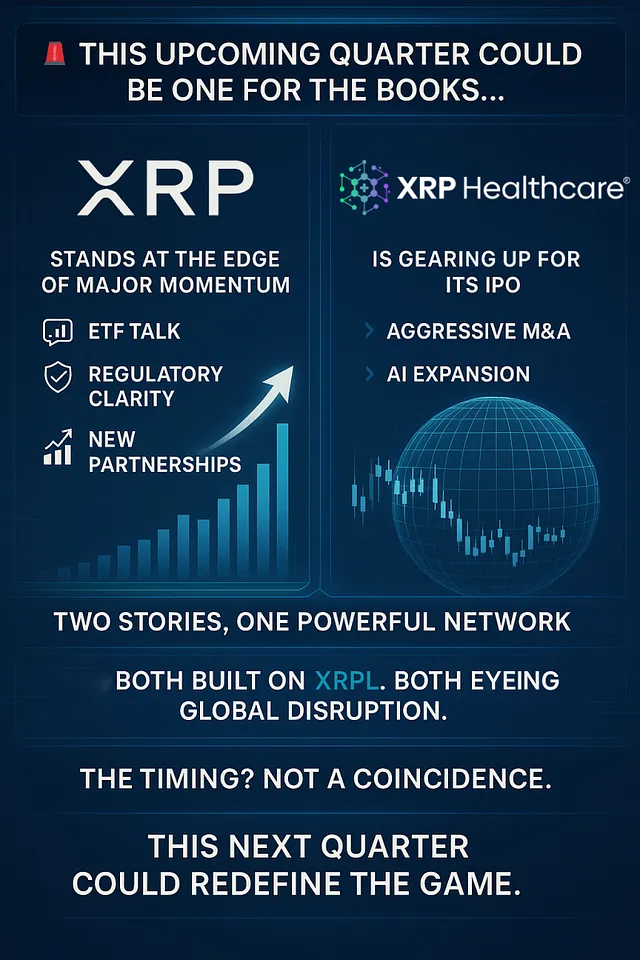
Years of development, regulatory battles, and strategic patience are now beginning to align in XRP’s favor. What once existed quietly beneath the surface is rapidly evolving into undeniable momentum. With ETF discussions entering mainstream financial conversations, regulatory clarity gradually emerging, and major institutional partnerships taking shape, XRP is no longer waiting on the sidelines-it’s positioning itself to lead.
These developments are more than optimistic headlines. They are institutional signals-clear indicators of growing confidence that suggest something transformational may be approaching.
XRP Healthcare: Preparing for the Public Markets
While XRP continues to strengthen its position within global finance, XRP Healthcare is quietly preparing for its own defining moment-a potential IPO.
Driven by strategic acquisitions and a strong commitment to AI-powered healthcare solutions for underserved markets, the company is building far more than a story-it’s building infrastructure. From digital healthcare systems to real-world pharmacy operations, XRP Healthcare is developing a modern framework for global medical access, particularly across regions often overlooked by traditional healthcare systems.
Its progress is no longer theoretical-it is already generating measurable impact.
Two Industries. One Foundation.
Finance and healthcare may appear to operate in completely different worlds, yet both XRP and XRP Healthcare are connected by the same underlying principle: fast, secure, scalable blockchain technology designed for practical real-world use.
Each continues advancing within its own sector, but the timing and direction of both movements feel increasingly aligned-intentional rather than coincidental.
The Bigger Picture: A Quarter That Could Change Everything
The convergence of institutional finance and disruptive healthcare innovation represents more than symbolism. It signals the beginning of a broader transformation. As both ecosystems continue building momentum, the coming quarter may become more than a milestone-it could mark a pivotal moment in how global systems are powered, connected, and accessed in the future.