Mar 6, 2026
Why Real-World Pharmacy Infrastructure Is Critical for Digital Healthcare Platforms
Discover why pharmacy infrastructure and healthcare supply chains are essential for digital healthcare platforms and AI health applications.
Retail network access is facilitated through agreements with United Networks of America (UNA). Display of pharmacy brand marks does not imply ownership, endorsement, or direct partnership with XRP Healthcare M&A Holding Inc.
Technology partnerships reflect collaborative or project-based cooperation. Display does not imply equity ownership or endorsement unless expressly stated.
Pharmaceutical and supply relationships reflect existing commercial arrangements within acquired operating entities. Display does not imply exclusivity or endorsement beyond standard commercial supply agreements.
Advisors provide professional services to XRP Healthcare M&A Holding Inc. No partnership or ownership interest is implied unless publicly disclosed.
All third-party trademarks remain the property of their respective owners. Display does not imply endorsement, ownership, or partnership unless expressly stated.
Mar 6, 2026
Discover why pharmacy infrastructure and healthcare supply chains are essential for digital healthcare platforms and AI health applications.
Digital healthcare platforms have grown rapidly in recent years. Artificial intelligence, mobile applications, telehealth, and digital diagnostics are transforming how patients access healthcare information. However, digital technology alone cannot deliver healthcare.
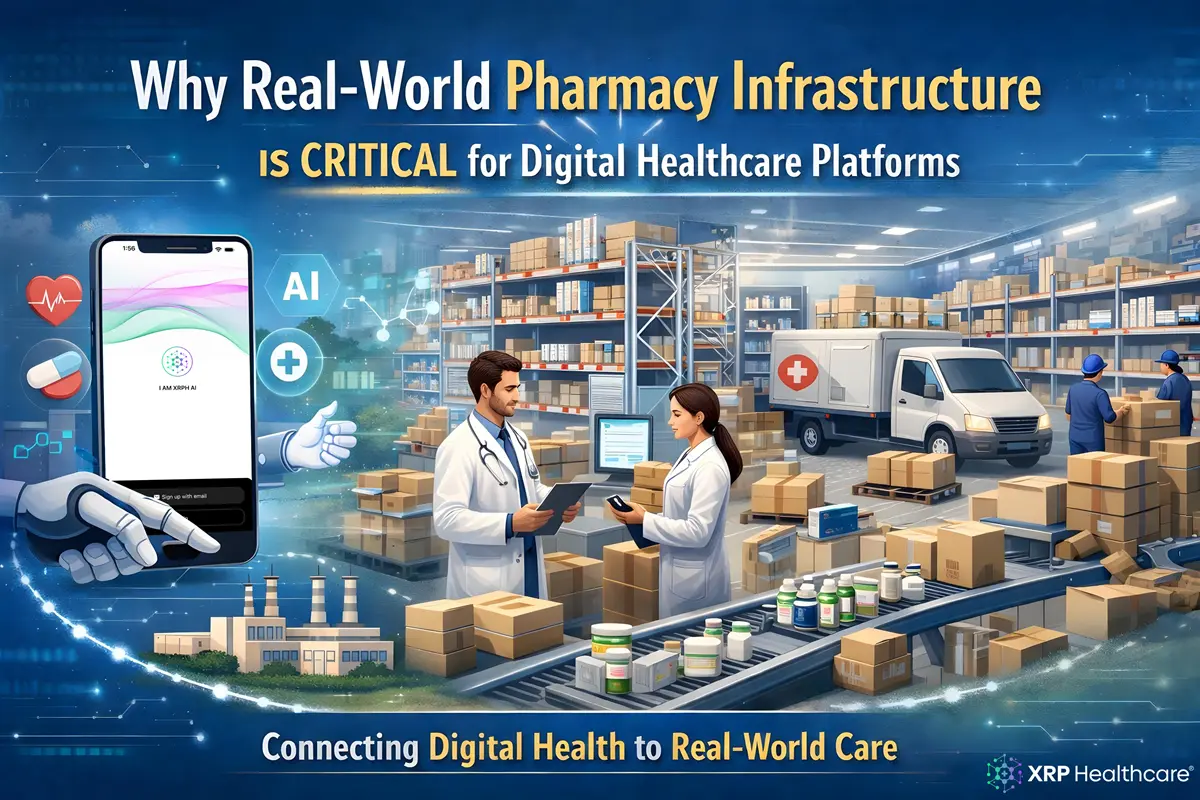
For digital healthcare platforms to create real impact, they must connect to physical healthcare infrastructure, including pharmacies, medicine supply chains, healthcare providers, and pharmaceutical distribution systems. Pharmacy infrastructure plays a central role in turning digital healthcare insights into real-world healthcare outcomes. Platforms like XRPH AI recognize that healthcare innovation must combine digital tools with real healthcare infrastructure.
This article is part of the XRPH AI Healthcare Platform Knowledge Series exploring how artificial intelligence and digital health technologies are transforming global healthcare access.
Pharmacies represent one of the most accessible entry points to healthcare worldwide. In many communities, pharmacies are the first place people seek medical advice before visiting hospitals or clinics.
According to the World Health Organization, community pharmacists now play a much broader role than simply dispensing medication. They help ensure access to medicines, provide patient advice, and support treatment adherence throughout therapy. This expanded role makes pharmacies essential components of modern healthcare systems.
Pharmacies provide:
Medication access
Patient counseling
Preventative healthcare guidance
Treatment adherence monitoring
Community health support
For many patients, pharmacies are the most accessible healthcare professionals available without appointments.
Behind every pharmacy sits a complex pharmaceutical supply chain. Healthcare supply chains ensure that essential medicines reach hospitals, pharmacies, and patients safely and efficiently.
Research shows that healthcare supply chain systems are essential for effective healthcare delivery because they ensure the availability of medicines and medical supplies at the point of care.
Without reliable supply chains, healthcare systems experience:
Medicine shortages
Delayed treatment
Increased healthcare costs
Reduced patient outcomes
Healthcare supply chains involve:
Pharmaceutical manufacturers
Wholesale distributors
logistics providers
licensed pharmacies
healthcare facilities
Digital healthcare platforms must integrate with these systems to ensure real-world healthcare access.
Many digital health startups focus purely on software. They build applications that provide health information or telemedicine consultations but lack connections to real healthcare infrastructure. This creates several limitations:
No Physical Healthcare Delivery Patients may receive guidance but cannot easily access medications or treatment. Limited Healthcare Integration Standalone apps rarely integrate with pharmacy networks or healthcare supply chains.
Lack of Healthcare Continuity Without infrastructure, digital guidance cannot translate into treatment. Healthcare technology must connect to the physical healthcare ecosystem.
Pharmacy roles are evolving globally. Pharmacists are increasingly recognized as key healthcare providers within primary care systems. Studies show that pharmacists now play active roles in patient care, medication management, and healthcare guidance rather than simply dispensing prescriptions.
In many countries, pharmacists support:
chronic disease management
preventative healthcare services
vaccination programs
medication reviews
public health campaigns
Pharmacies are becoming integrated healthcare hubs within communities.
Why Infrastructure Matters for Digital Healthcare Platforms Digital health platforms that integrate with healthcare infrastructure gain several advantages:
Real-World Treatment Access Patients can move from digital guidance to medication access quickly. Healthcare System Integration Digital platforms can connect users to doctors, pharmacies, and healthcare providers. Improved Patient Outcomes Infrastructure ensures healthcare guidance leads to actual treatment. Greater Trust and Adoption Users are more likely to trust platforms connected to real healthcare providers. Digital healthcare must operate within the broader healthcare ecosystem.
XRPH AI is designed to integrate digital healthcare tools with physical healthcare systems. The platform combines:
AI health guidance
image-based symptom education
women's health tools
multilingual medical guidance
CalmXRPH™ stress support
counterfeit medicine awareness
In addition to digital services, the broader strategy includes healthcare infrastructure participation through pharmacy networks and pharmaceutical distribution operations. This infrastructure model helps ensure that digital healthcare insights can translate into real healthcare access.
The future of healthcare will not be purely digital. Instead, healthcare innovation will likely combine:
Artificial intelligence and digital health tools
Real-world healthcare infrastructure
Integrated pharmacy networks
Secure digital systems protecting patient privacy
Pharmacies will continue to play a vital role in bridging digital healthcare insights with real-world medical treatment. Platforms capable of integrating both digital and physical healthcare systems will be better positioned to expand healthcare access globally.
Why are pharmacies important in healthcare systems?
Pharmacies provide medication access, patient counseling, and healthcare advice. They often serve as the first point of contact for patients seeking medical guidance.
What is a healthcare supply chain?
A healthcare supply chain is the network of manufacturers, distributors, pharmacies, and healthcare providers that ensure medicines reach patients safely and efficiently.
Why must digital healthcare platforms connect to pharmacies?
Digital healthcare guidance must connect to real healthcare infrastructure to ensure patients can access treatments and medications.
What is XRPH AI?
XRPH AI is a digital healthcare platform combining artificial intelligence tools with scalable healthcare infrastructure.
XRPH AI App is operated by XRP Healthcare M&A Holding Inc., focused on healthcare delivery, pharmacy infrastructure, and subscription monetization.
XRPH AI token is owned and governed by XRP Healthcare LLC and licensed for structured ecosystem utility only. The token does not represent equity, ownership, dividends, governance rights, or profit participation in XRP Healthcare M&A Holding Inc.