As digital healthcare platforms continue to expand, protecting sensitive health information has become one of the most important responsibilities for healthcare technology providers.
Healthcare data is among the most sensitive categories of personal information. Any platform that provides digital health guidance must prioritize privacy, security, and responsible data practices.
With the rapid growth of mobile healthcare applications and artificial intelligence in healthcare systems, ensuring the protection of Protected Health Information (PHI) has become a central concern for developers, healthcare organizations, and regulators.
Platforms such as XRPH AI are designed with privacy and security considerations at the forefront, reflecting the importance of responsible digital healthcare architecture in the smartphone era.
This transformation is part of a broader shift toward mobile-first healthcare, where digital platforms provide guidance and healthcare access through smartphones.
Understanding Protected Health Information (PHI)
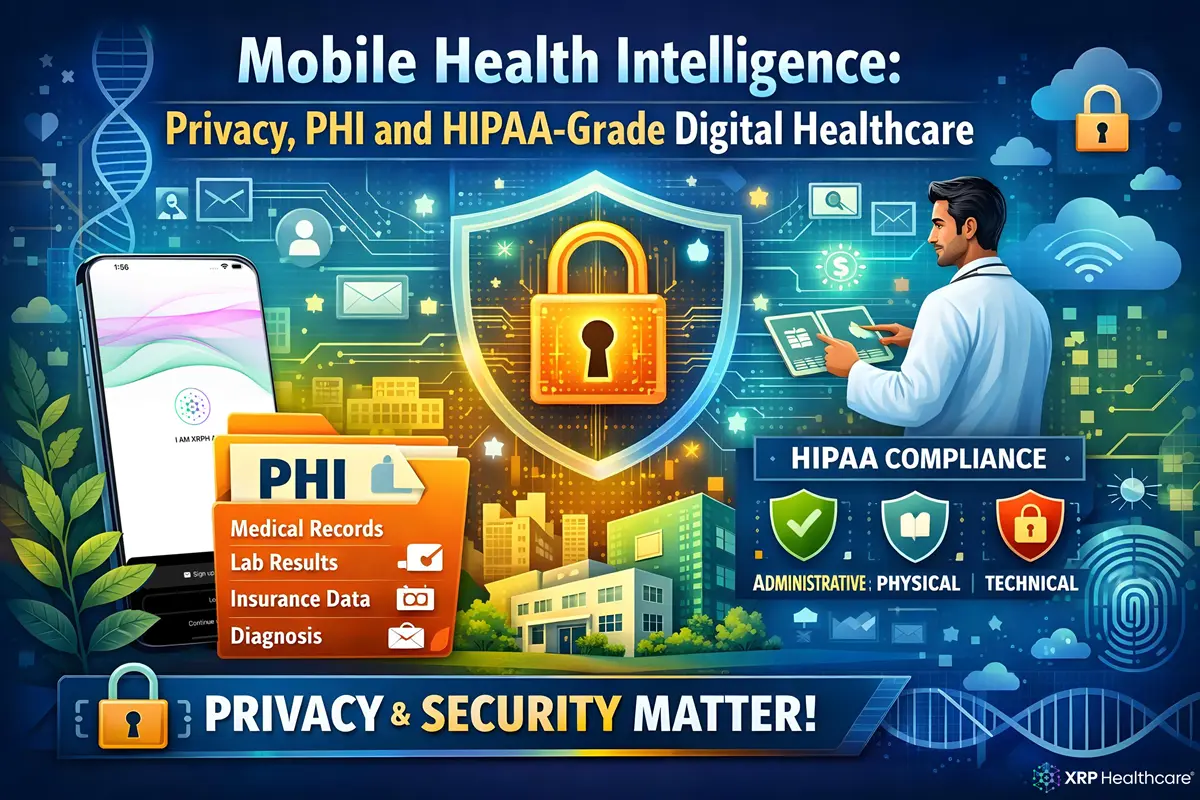
Protected Health Information, often referred to as PHI, includes any identifiable information related to an individual’s health status, healthcare services, or medical records. Examples of PHI can include:
Because this information is highly sensitive, healthcare systems must implement strict safeguards to ensure it is handled responsibly and securely. Digital healthcare platforms must therefore implement privacy frameworks that align with established healthcare security principles.
What HIPAA Standards Mean for Digital Health
The Health Insurance Portability and Accountability Act (HIPAA) establishes standards in the United States for protecting sensitive healthcare information. The HIPAA Security Rule requires healthcare organizations and related systems to implement safeguards designed to protect electronic protected health information. These safeguards generally fall into three categories:
administrative safeguards, which define policies and procedures
physical safeguards, which protect systems and infrastructure
technical safeguards, which protect digital information systems
These principles are widely recognized as a benchmark for responsible healthcare data protection.
Why Privacy Matters in Mobile Healthcare
Mobile healthcare platforms rely on smartphones and digital connectivity to deliver healthcare guidance. While this creates enormous opportunities for expanding access to healthcare information, it also introduces new responsibilities for protecting user data. Users must be able to trust that digital health platforms:
handle health information responsibly
minimize unnecessary data collection
protect sensitive information from unauthorized access
prioritize security across their infrastructure
Without trust, digital healthcare adoption becomes difficult. For this reason, privacy-first design has become a central pillar of modern healthcare technology development.
Privacy-First Architecture in Digital Health Platforms
Responsible digital healthcare systems increasingly adopt privacy-first architectures. This approach focuses on designing systems that reduce exposure of sensitive information and prioritize user confidentiality. Key principles often include:
limiting the storage of sensitive data
minimizing the collection of personally identifiable information
protecting communications between systems
implementing secure authentication and encryption mechanisms
These practices help reduce the risk of data exposure and support safer digital healthcare environments.
XRPH AI and Privacy-Focused Digital Health
XRPH AI is designed with a strong emphasis on privacy and responsible digital health architecture. The platform incorporates HIPAA-grade security standards and privacy-conscious design principles to help protect user confidentiality. XRPH AI focuses on providing accessible health guidance while minimizing exposure of sensitive information. This approach reflects a broader commitment to building digital healthcare platforms that balance accessibility with strong data protection practices. Current XRPH AI capabilities include:
AI-powered healthcare guidance
multilingual communication
image uploads for visible health concerns such as skin or throat conditions
CalmXRPH wellness features
local doctor search tools
the XRP Healthcare Prescription Savings Card accepted at over 68,000 pharmacies across the United States
By integrating these tools within a privacy-conscious architecture, XRPH AI aims to support users while respecting the importance of healthcare data protection.
The Future of Secure Digital Healthcare
As digital healthcare technologies continue to evolve, security and privacy will remain essential components of responsible innovation. Healthcare organizations, regulators, and technology developers are increasingly focused on strengthening digital healthcare protections. Future digital healthcare platforms are expected to emphasize:
These developments will play an important role in ensuring that digital healthcare systems can expand access to health guidance while maintaining user trust.
CONCLUSION
Digital healthcare platforms offer powerful opportunities to expand access to health information and support. However, these opportunities must be balanced with strong privacy protections and responsible data practices. As mobile healthcare platforms continue to grow, maintaining trust through privacy-first design will remain essential. XRPH AI operates within this evolving digital healthcare environment by emphasizing secure architecture, responsible AI use, and accessible mobile healthcare guidance. Protecting sensitive health information is not just a regulatory requirement - it is a foundational principle for the future of digital healthcare.
FAQ
What is PHI in healthcare?
Protected Health Information (PHI) refers to identifiable health information related to an individual’s medical history, treatment, or health status.
Why is HIPAA important for digital healthcare?
HIPAA establishes standards for protecting sensitive health information and ensures that healthcare systems implement safeguards to protect electronic health records.
How does XRPH AI protect user privacy?
XRPH AI incorporates HIPAA-grade security principles and privacy-focused architecture designed to protect user confidentiality.