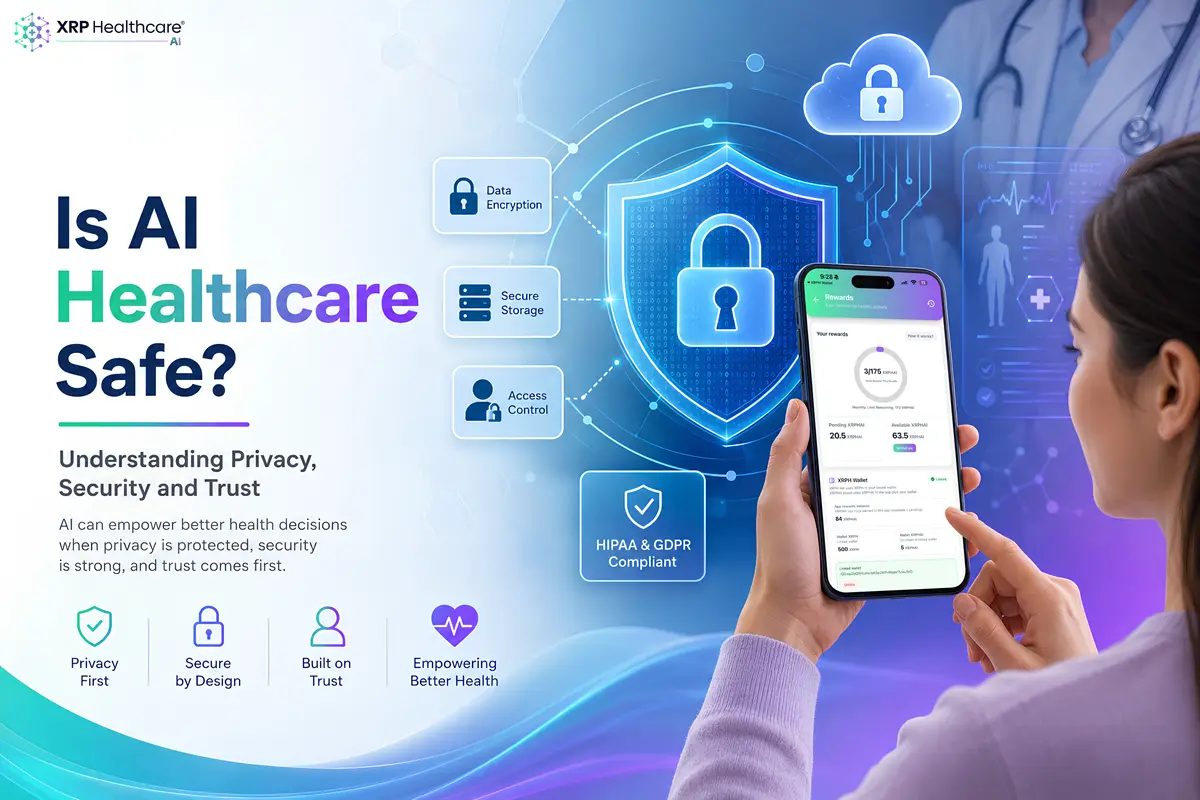
Artificial intelligence is rapidly becoming part of everyday healthcare.
People now use AI to learn about medicines, understand symptoms, prepare for medical appointments and access healthcare information more quickly than ever before.
As these technologies become more common, an important question naturally follows:
Can AI healthcare be trusted?
For many people, the answer depends not only on how intelligent an AI system is, but also on how responsibly it handles privacy, security and healthcare information.
Healthcare has always relied on trust.
Patients trust doctors with personal conversations, pharmacists with their medications and healthcare providers with sensitive information. Digital healthcare platforms must earn that same trust by protecting user privacy, communicating transparently and recognising the limits of artificial intelligence.
Responsible healthcare AI is not simply about providing answers. It is about delivering reliable educational guidance while respecting privacy, encouraging professional medical care and using technology safely.
To understand how these principles fit within the broader future of intelligent healthcare, explore our comprehensive AI Healthcare Platform guide.
Why Trust Matters in Healthcare AI
Healthcare decisions are personal.
Whether someone is asking about a headache, learning about a new prescription or seeking information about a long-term condition, they expect healthcare technology to treat their information responsibly.
Without trust, even the most advanced AI system is unlikely to be widely adopted.
People want confidence that:
Their information is handled responsibly.
The platform is transparent about its capabilities.
The AI does not make misleading medical claims.
Privacy is taken seriously.
Healthcare professionals remain central to diagnosis and treatment.
Building this trust requires more than sophisticated technology. It requires responsible design and clear communication.
Understanding Privacy in AI Healthcare
One of the biggest concerns surrounding artificial intelligence is privacy.
Many people worry about what happens to the information they share with an AI healthcare platform.
Questions often include:
Is my information stored?
Who can access my conversations?
Is my personal health information protected?
Can my information be shared with others?
How secure is the platform?
These are important questions that every healthcare technology provider should address openly.
Users should always review a platform's privacy policy and terms of use before sharing personal information.
Understanding how information is collected, processed and protected helps users make informed decisions about which digital healthcare services they choose to use.
What Is Protected Health Information (PHI)?
Protected Health Information (PHI) is information that can identify an individual and relates to their health, healthcare or payment for healthcare services.
Examples include:
Protecting PHI is a fundamental responsibility within many healthcare systems and is governed by regulations in numerous countries.
When evaluating healthcare technology, users should understand whether a platform stores or processes PHI and what safeguards are in place.
Responsible AI Is Transparent About Its Limitations
Trustworthy healthcare AI does not claim to know everything.
Instead, responsible platforms clearly explain what artificial intelligence can and cannot do.
AI can:
Explain healthcare concepts.
Provide educational information.
Help users understand medicines.
Support health literacy.
Encourage appropriate medical care.
However, AI cannot:
Replace doctors.
Diagnose illnesses with certainty.
Perform physical examinations.
Prescribe treatment.
Respond to medical emergencies.
Security Is More Than Encryption
Healthcare security involves much more than encryption.
How the XRPHAI App Approaches Privacy
The XRPHAI App has been designed with privacy and responsible AI at its core.
The platform is engineered to provide healthcare education and AI-powered guidance without storing Protected Health Information (PHI).
Its connected ecosystem includes:
Responsible Innovation Builds Confidence
Artificial intelligence has enormous potential to improve access to healthcare information, but innovation must always be balanced with responsibility.
How Responsible AI Builds Long-Term Trust
Trust is earned through transparency, consistency and responsible design.
People are more likely to use AI-powered healthcare tools when they understand:
What the platform is designed to do.
What it is not designed to do.
How their information is handled.
When they should seek professional medical care.
What safeguards are in place.
Privacy Standards Around the World
Healthcare privacy is protected by different laws and regulations around the world.
Common principles include:
Respect for patient privacy
Appropriate security measures
Transparency about data use
Accountability
Protection against unauthorised access
Best Practices When Using AI Healthcare Platforms
Use AI to improve understanding rather than self-diagnose.
Read the platform's privacy policy and terms of use.
Do not delay professional medical care.
Seek emergency medical attention when required.
Discuss important health decisions with qualified professionals.
Choose trusted healthcare platforms.
The Benefits of Responsible Healthcare AI
Improves access to healthcare information.
Supports health literacy.
Helps prepare for medical appointments.
Explains medicines and healthcare terminology.
Encourages earlier healthcare engagement.
Provides guidance whenever needed.
Supports preventive healthcare.
Improves confidence navigating healthcare services.
Understanding the Limitations
AI cannot:
Replace medical expertise.
Interpret every individual's complete medical history.
Perform physical examinations.
Deliver emergency medical treatment.
Make definitive diagnoses.
Guarantee outcomes.
The Future of Trusted Digital Healthcare
Future developments are likely to include:
More personalised healthcare education
Improved multilingual support
Natural voice conversations
Better healthcare navigation
Smarter educational tools
Enhanced accessibility
Greater integration with trusted healthcare services
More personalised user experiences while respecting privacy
The XRPHAI Vision
Artificial intelligence should empower people-not replace healthcare professionals.
The platform includes:
Conclusion
Artificial intelligence has the potential to transform how people access healthcare information, but technology alone is not enough.
For AI to become a trusted part of everyday healthcare, it must be developed responsibly, communicate transparently and respect user privacy.
The most successful healthcare AI platforms will complement healthcare professionals, improve health literacy and empower patients to make better-informed decisions.
The XRPHAI App reflects this vision by combining intelligent healthcare guidance, medicine education, symptom support and healthcare navigation within a privacy-first AI Healthcare Platform that is engineered not to store Protected Health Information (PHI).
As digital healthcare continues to evolve, trust, transparency and patient-centred design will remain the foundations of responsible AI innovation.
Experience Trusted AI Healthcare
Discover how the XRPHAI App combines AI-powered healthcare guidance with a privacy-first approach to help you better understand your health while complementing qualified healthcare professionals.
Learn More About Intelligent Healthcare
Explore how AI-powered medicine guidance, healthcare education and Prescription Savings are working together within the XRPHAI App.
Continue your journey:
Frequently Asked Questions
Is AI healthcare safe?
AI healthcare can be a valuable educational tool when developed responsibly. Users should choose trusted platforms that communicate clearly about privacy, security and the limitations of artificial intelligence.
Does AI replace doctors?
No. AI is designed to complement healthcare professionals by improving access to healthcare information and supporting patient education. Diagnosis and treatment remain the responsibility of qualified clinicians.
What is Protected Health Information (PHI)?
Protected Health Information (PHI) refers to information that can identify an individual and relates to their health, healthcare or payment for healthcare services.
Why is privacy important in AI healthcare?
Healthcare information is highly personal. Strong privacy practices help protect users, build trust and ensure responsible handling of sensitive information.
How can I use AI healthcare safely?
Use AI to improve your understanding of healthcare information, read the platform's privacy policy, and always seek professional medical advice for diagnosis, treatment or emergencies.
Does the XRPHAI App store Protected Health Information (PHI)?
The XRPHAI App is engineered to provide AI-powered healthcare guidance without storing Protected Health Information (PHI). It focuses on healthcare education and user empowerment rather than functioning as an electronic medical record.
Can AI explain medicines?
Yes. AI can provide educational information about medicines, including their purpose, common uses and frequently reported side effects. It should not replace advice from a doctor or pharmacist.
What makes an AI healthcare platform trustworthy?
Transparency, privacy, strong security practices, responsible AI design and clear recognition of the role of healthcare professionals all contribute to trust.
Is healthcare information protected around the world?
Many countries have privacy laws governing healthcare information, although the specific regulations vary by jurisdiction.
Where can I learn more?
Visit the XRP Healthcare AI Healthcare Platform page to discover how responsible artificial intelligence is helping make healthcare more accessible, understandable and secure.