Artificial intelligence is transforming healthcare-but technology alone is not enough to drive meaningful, long-term change. One of the biggest challenges in digital healthcare is user engagement. The video above-How AI Can Heal Healthcare by Edmund Jackson-highlights how AI is reshaping healthcare systems and improving outcomes globally. But beyond innovation, there is another powerful force driving adoption: 👉 Reward-based engagement systems These systems are rapidly becoming essential in ensuring that users not only access healthcare platforms-but continue using them consistently.
The Engagement Problem in Healthcare
Traditional healthcare systems are largely reactive. Users typically:
This creates a major gap: 👉 Low engagement leads to poorer long-term outcomes Digital healthcare platforms aim to solve this-but without the right engagement mechanisms, even advanced platforms struggle to retain users.
What Are Reward-Based Engagement Systems?
Reward systems are designed to encourage users to take consistent action within a platform. These rewards can include:
Across industries, reward systems have proven to:
Why Rewards Work: Behavioural Psychology
Reward systems are effective because they align with fundamental behavioural principles. These include:
Positive Reinforcement
Users are more likely to repeat actions that result in positive outcomes.
Habit Formation
Consistent rewards help build routines over time.
Motivation Through Progress
Users feel encouraged when they see measurable benefits.
Reduced Friction
Rewards make engagement feel valuable rather than effort-based.
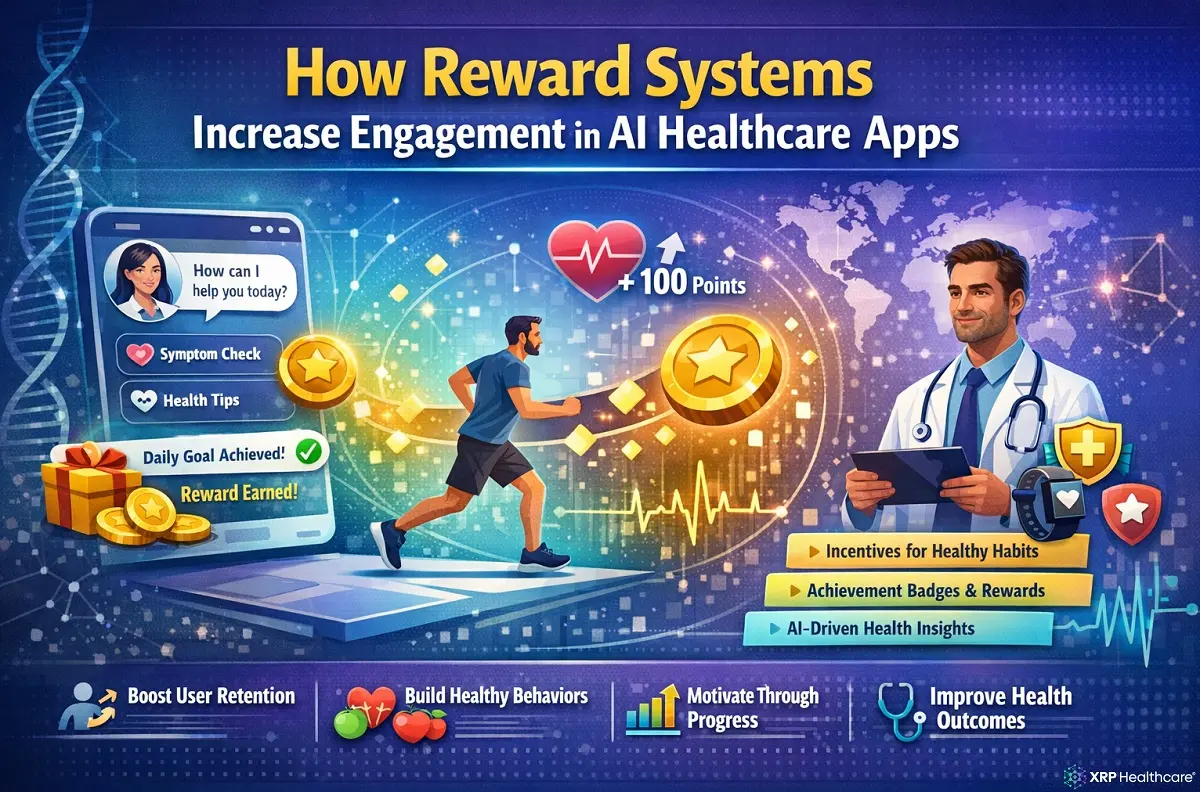
The Role of Rewards in AI Healthcare Apps
In AI healthcare platforms, reward systems play a unique role. They can encourage users to:
This leads to:
From Passive Users to Active Participants
Without engagement systems, users remain passive. They:
With reward-driven systems: 👉 Users become active participants in their own healthcare journey This shift is critical for the future of digital health.
Real-World Examples of Reward Systems
Reward systems are already proven across multiple industries: Fitness Apps Users are rewarded for completing workouts and maintaining streaks. Financial Platforms Users receive incentives for saving, spending, or engaging with services. Mobile Applications Gamification increases interaction and retention rates. In many cases, these systems increase engagement by 30% to over 200%. Healthcare is now adopting similar models.
Combining AI and Engagement: A Powerful Model
When AI capabilities are combined with reward systems, the result is a highly effective platform. This model includes:
Together, these elements create: 👉 A system that users return to consistently
Real-World Application in AI Healthcare Platforms
Modern AI healthcare platforms are designed to integrate both utility and engagement. Users can:
Reward systems enhance this by reinforcing these behaviours over time.
Infrastructure That Supports Engagement
Behind reward-driven platforms is a strong infrastructure layer. Technologies such as the XRP Ledger enable:
This infrastructure supports the delivery of engagement systems at scale.
Where XRPH AI Fits Into This Model
XRPH AI represents a platform built around both utility and engagement. By combining:
…it demonstrates how modern healthcare platforms can move beyond simple functionality. The focus is not just on providing tools-but on ensuring those tools are used consistently and effectively
The Future of Engagement in Healthcare
Healthcare is moving toward a model where:
Reward systems will become increasingly important in:
This marks a shift from reactive healthcare to proactive, user-driven systems
What Comes Next
As AI healthcare platforms evolve, engagement systems will become more advanced. Future developments may include:
This evolution will define how digital healthcare platforms scale and succeed.
❓ FAQ
Why are rewards important in healthcare apps?
Rewards increase engagement, encourage consistent usage, and help users develop healthier habits.
Do reward systems really improve user behaviour?
Yes, studies show reward systems can significantly increase engagement and retention across industries.
How do AI healthcare apps use rewards?
They incentivise users to interact with the platform, track health, and engage with features regularly.
Are reward systems common in healthcare today?
They are becoming more common as digital healthcare platforms evolve.
What makes a healthcare app engaging?
Ease of use, real-world utility, accessibility, and effective engagement systems.