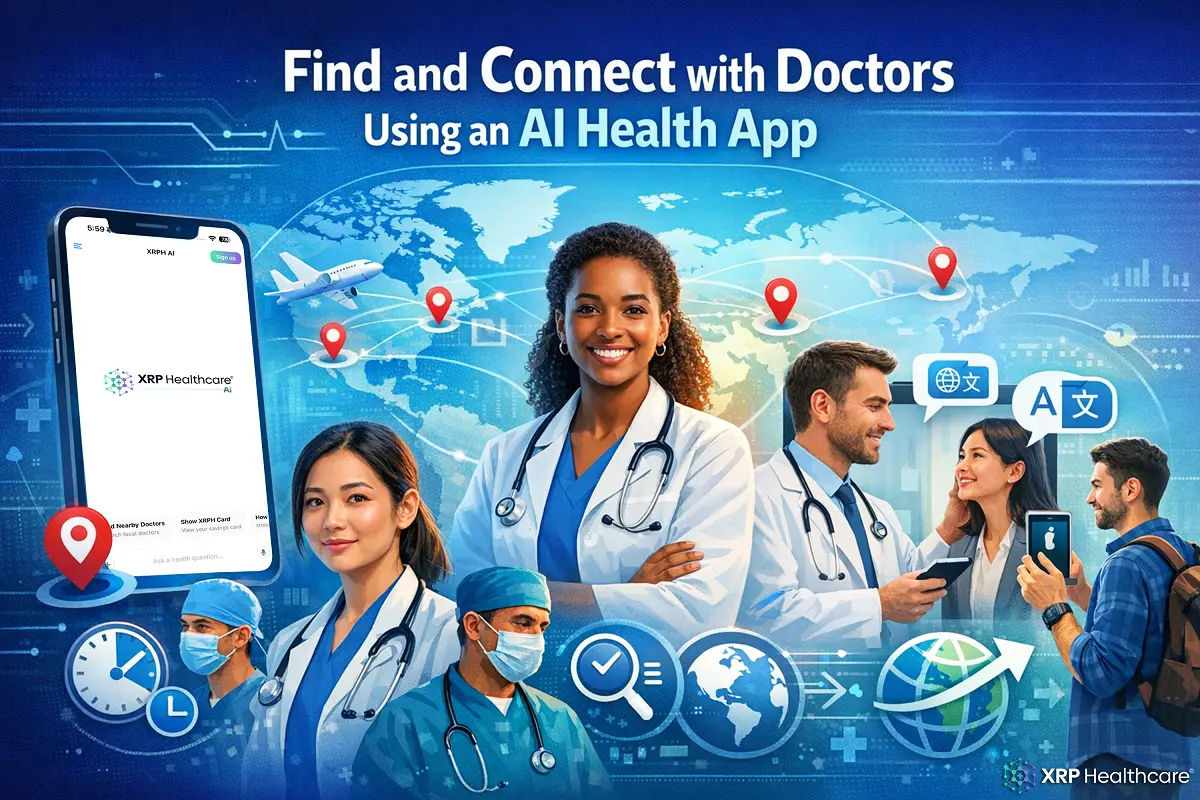
Access to doctors remains one of the biggest challenges in healthcare globally. For many people, the difficulty is not only getting treatment, but finding the right doctor, in the right location, at the right time, and in a language they understand. The video above, Can AI Catch What Doctors Miss? by Eric Topol, published by TED, highlights how artificial intelligence can strengthen healthcare by identifying patterns, improving insight, and supporting better decision-making. That same broader shift is also changing how people discover and connect with healthcare professionals. Today, AI health apps are helping move healthcare access from a slow, fragmented process to something faster, more direct, and far more user-friendly.
Why Finding the Right Doctor Is Still a Major Problem
In many healthcare systems, users face avoidable friction before they ever reach a qualified professional. Common challenges include:
not knowing which type of doctor they need
limited local access to specialists
long waiting times
unclear healthcare pathways
difficulty comparing options
language barriers when seeking help abroad or in multilingual regions
These obstacles can delay care, create confusion, and discourage early action. In healthcare, delay often makes problems worse. That is why improving doctor connectivity is one of the most practical and important forms of utility in a modern AI healthcare app.
How AI Health Apps Improve Doctor Discovery
An AI health app can simplify the process of finding the right healthcare professional by helping users narrow down what they need before they begin searching. Instead of starting from zero, users can move through a more guided path:
identify a concern or symptom
receive AI-led support or early guidance
explore relevant healthcare provider options
connect with a doctor more efficiently
This creates a smoother healthcare journey. It reduces uncertainty and gives users a clearer route from concern to action. That is one reason AI healthcare app utility matters so much. It turns digital health from a passive information source into an active access tool.
From Information to Connection
Many health platforms stop at education. They may provide articles, symptom lists, or general advice, but leave the user to work out the next step alone. AI health apps with real-world utility go further. They help bridge the gap between:
That bridge is where practical digital healthcare becomes truly useful. Users increasingly expect healthcare tools to work with the same simplicity as the other digital services they use every day. They do not just want information. They want direction, speed, and clarity.
Global Accessibility Changes the Model
One of the strongest advantages of AI-powered health apps is that they are not limited by traditional geographic constraints in the same way older healthcare access models often are. Global accessibility matters because many users:
live in regions with limited specialist access
travel frequently
need healthcare support across borders
want broader choice beyond their immediate area
Digital health apps can make provider discovery easier and more scalable, especially when supported by intelligent interfaces and connected systems. This is especially relevant for healthcare platforms with international ambitions. The future of digital health is not local-only. It is global, mobile, and increasingly on-demand.
Multilingual Communication Makes Access More Real
Access is not only about finding a doctor. It is also about being able to communicate clearly. Language barriers are one of the most overlooked problems in healthcare. A user may find a doctor, but still struggle to explain symptoms, understand responses, or navigate treatment instructions confidently. This is where multilingual healthcare support becomes a major feature, not a minor extra. AI health apps that support multiple languages and dialects can improve the user experience by helping people:
In practical terms, multilingual communication increases trust, usability, and reach.
Why This Is a Strong Example of Utility
Doctor connectivity is one of the clearest examples of real utility in an AI healthcare platform because it solves an immediate and understandable problem. A useful platform should do more than look advanced. It should help users achieve something valuable in real life. Helping users find and connect with doctors delivers value by:
This is the kind of utility that supports long-term adoption.
The Role of Engagement in Healthcare Access
Utility is powerful on its own, but it becomes even stronger when paired with engagement design. A healthcare platform that offers meaningful features, encourages regular interaction, and makes access easier is far more likely to become part of a user’s routine. This matters because the future of digital healthcare is not just about one-time use. It is about building platforms people return to consistently. Features that improve connectivity, reduce friction, and support user confidence help create that ongoing relationship.
Real-World Examples of Connectivity in AI Health Apps
Modern AI healthcare apps can support doctor access in several practical ways:
helping users identify the type of care they may need
surfacing doctor-search functions inside the app
improving access to providers in different regions
simplifying mobile-first healthcare journeys
supporting multilingual interaction across borders
These are not abstract innovations. They are practical features that improve how people navigate healthcare.
Where XRPH AI Fits In
XRPH AI reflects this shift toward accessible, user-focused healthcare utility. With features designed around real-life usability, the platform supports a more practical healthcare experience by combining:
AI-led health support
doctor search and connect functionality
multilingual access across major languages and dialects
mobile-first convenience
broader healthcare accessibility
This kind of structure matters because it helps users move from uncertainty to action more efficiently. Rather than leaving users to search through fragmented systems on their own, the aim is to make healthcare discovery and access more seamless.
Why Connectivity Will Matter More in the Future
As AI healthcare continues to evolve, doctor connectivity will become even more important. The platforms that stand out will not be the ones that only talk about innovation. They will be the ones that make healthcare easier to access in practical, everyday ways. That means helping users:
find the right doctor faster
connect across locations
communicate across languages
reduce barriers that traditionally slow healthcare access
This is where digital health becomes tangible. Not just intelligent, but usable.
Conclusion
AI is reshaping healthcare in many ways, from diagnostics and insight to speed and accessibility. One of the most meaningful applications is helping users find and connect with doctors more easily. The video above by Eric Topol, published by TED, highlights how AI can improve medical insight. That same evolution also supports a wider transformation in how people access care. As healthcare becomes more digital, platforms that combine intelligence, usability, global reach, and multilingual support will define the next phase of patient access. Doctor connectivity is not a side feature. It is one of the clearest signs that an AI healthcare app is delivering real-world utility.
FAQ
How do AI health apps help users find doctors?
They help simplify the journey by guiding users from symptoms or health concerns toward relevant healthcare provider options and easier connection paths.
Why is doctor connectivity important in an AI healthcare app?
It delivers practical value by helping users move from uncertainty to action faster, reducing barriers to care.
Can AI health apps support global doctor access?
Yes. Digital healthcare platforms can improve access across regions by making provider discovery more mobile and internationally accessible.
Why does multilingual communication matter in healthcare apps?
It helps users understand information, communicate symptoms more clearly, and feel more confident when connecting with doctors.
What makes doctor search a strong utility feature?
It solves an immediate real-world problem, saves time, reduces confusion, and improves access to healthcare professionals.