Artificial intelligence is rapidly reshaping healthcare, moving beyond theory into real-world applications that improve access, reduce costs, and enhance patient outcomes. To understand the broader landscape of this transformation, the video above-Artificial Intelligence in Healthcare: Opportunities and Challenges by Navid Toosi Saidy-explores how AI is already influencing healthcare systems globally. While this highlights the opportunities and challenges of AI, the next phase of healthcare innovation is focused on something even more critical: 👉 Real-world utility and user engagement through intelligent, accessible platforms
From Theory to Real-World Utility
AI in healthcare is no longer just about innovation-it is about practical, everyday use. Modern AI healthcare platforms are designed to:
However, one key factor separates successful platforms from the rest: 👉 Utility - the ability to deliver consistent, real-world value to users
What “Utility” Really Means in AI Healthcare
In digital healthcare, utility refers to how effectively a platform can be used in real-life situations. This includes:
Platforms that deliver utility become part of a user’s daily life, not just something they try once.
The Rise of Reward-Driven Healthcare Platforms
As digital platforms evolve, a new layer is emerging: 👉 Reward-based engagement systems Across multiple industries, reward systems have proven to significantly increase:
In healthcare, this becomes even more powerful. Why? Because rewards can encourage:
This is not theoretical. Studies across mobile and fintech platforms show that reward-based systems can increase engagement by 30% to over 200%, depending on implementation.
AI Healthcare Meets Engagement Design
The next generation of healthcare platforms combines:
This creates a system where users are not only supported-but also encouraged to stay active within the platform. Key components include:
Real-World Utility in Action
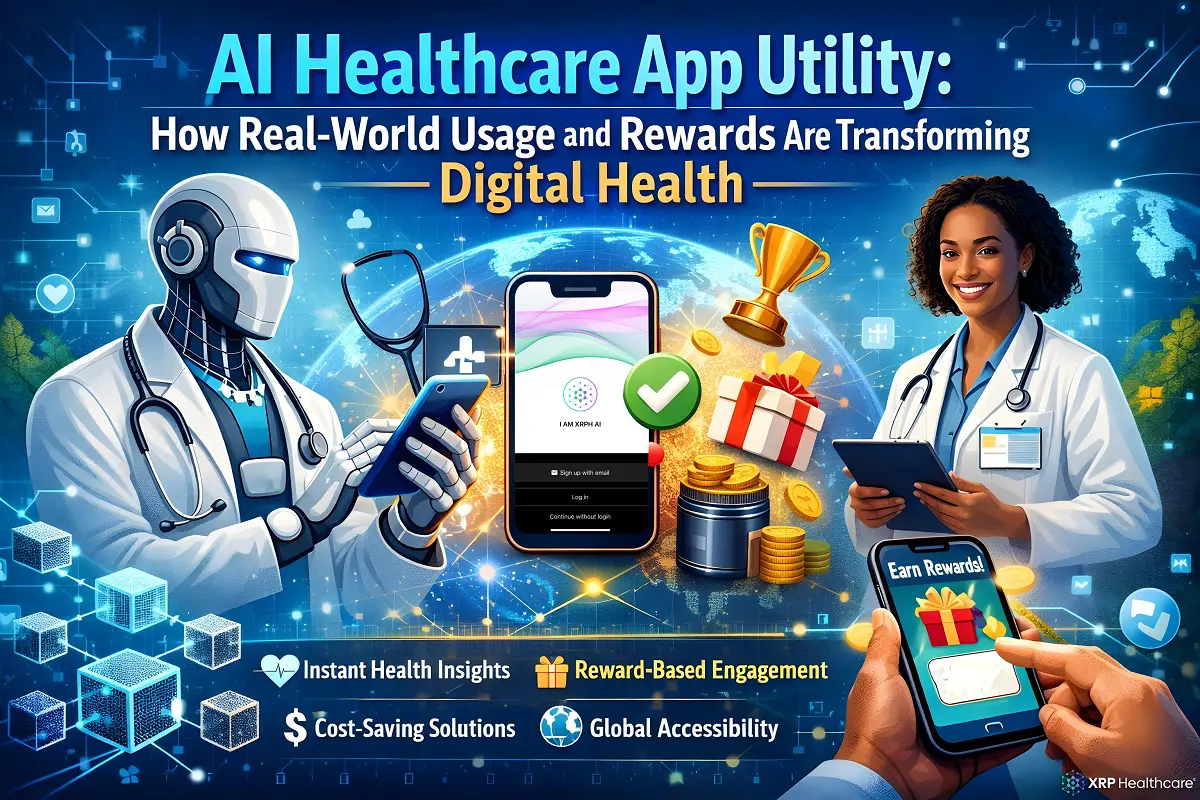
Platforms like XRPH AI represent how these concepts are being applied in real-world scenarios. Users can:
This transforms healthcare from a reactive system into a more accessible and user-driven experience
Global Growth of AI Healthcare and Digital Engagement
The growth of AI healthcare is accelerating rapidly.
At the same time, infrastructure supporting these platforms is evolving. Technologies such as blockchain-based systems, including the XRP Ledger, are enabling:
These infrastructure layers support the expansion of digital healthcare ecosystems worldwide.
Understanding the Structure Behind XRPH AI
To ensure clarity, it is important to understand how the XRPH AI ecosystem is structured.
XRP Healthcare M&A Holding Inc.Owns and operates the AI healthcare platform, including app development, healthcare access, and global expansion initiatives
This separation ensures:
Why Utility Will Define the Next Phase of Healthcare
The healthcare industry is entering a new phase. Not driven by: ❌ Hype❌ Concepts❌ Early-stage ideas But by: ✅ Real usage✅ Daily engagement✅ Measurable value AI healthcare platforms that deliver utility-and reinforce that utility through intelligent engagement systems-will define the future of digital health.
What Comes Next
As AI healthcare platforms continue to evolve, the focus will shift further toward:
This is where utility, accessibility, and engagement converge to create platforms that are not only innovative-but essential.
❓ FAQ
What is utility in AI healthcare?
Utility refers to how effectively an AI healthcare platform can be used in real-life situations, providing consistent value such as health insights, accessibility, and cost savings.
Why are rewards important in healthcare apps?
Rewards encourage engagement, promote healthier behaviours, and increase long-term platform usage.
Are AI healthcare apps replacing doctors?
No. AI healthcare apps support users with information and early insights but do not replace professional medical advice.
How does AI improve healthcare access?
AI enables users to access information instantly, connect with providers, and receive guidance regardless of location.
What is the XRP Healthcare ecosystem?
It consists of a structured approach where infrastructure and platform operations are separated to enable scalability and clarity.